
International
Iran Demands $290 Billion Compensation from US Over Decades of Damage

Iran has formally demanded $290 billion in compensation from the United States, citing decades of damages caused by American actions, while simultaneously issuing a stern warning regarding potential military responses to naval blockades. The Iranian judiciary has reportedly issued rulings against the US for this substantial sum, escalating tensions in the Middle East. Tehran has characterized the ongoing naval restrictions not merely as economic sanctions, but as direct military aggression against the nation.
Legal and Military Stance
Tehran has initiated legal proceedings against both the United States and several Gulf Arab nations, accusing the latter of facilitating US military operations. Citing Article 51 of the UN Charter, Iranian officials asserted their right to self-defense, which includes the potential for strikes against US military installations. This legal strategy aims to exert international pressure while signaling a readiness to escalate if regional security remains compromised.
Economic Impact and Strategic Risks
More than 80 percent of Iran’s total imports and exports transit through the Strait of Hormuz or its southern ports. The naval blockade has placed severe strain on the Iranian economy, forcing the government to seek alternative trade routes. This strategic vulnerability has turned the waterway into a flashpoint, with Tehran warning that any further interference could trigger a significant military confrontation.
Iranian Foreign Ministry Spokesperson Esmaeil Baghaei said, “We view the US naval blockade as a direct act of military aggression rather than simple economic sanctions.”
Diplomatic Impasse
Diplomatic efforts to resolve the crisis remain stalled following the collapse of draft negotiations in June. Iranian officials claimed that if the United States lifts the naval blockade and removes existing sanctions, normal operations in the Strait of Hormuz could be restored within 48 hours. However, with no new progress reported, the prospect of a diplomatic breakthrough remains highly uncertain.

Despite the conclusion of the 31st UN Climate Change Conference (COP31) in Antalya, Turkey, without a final agreement, Bangladesh successfully secured 1.05 billion taka in climate grant commitments. The summit ended without a consensus on fossil fuel reduction or adaptation financing, marking the first time since the 2009 Copenhagen summit that a COP event concluded without a formal document. This outcome highlights significant challenges in global climate diplomacy for vulnerable nations.
The conference failed to establish a concrete roadmap for loss and damage funding, leaving many developing nations disappointed. Global leaders struggled to reach an agreement on the 120 billion dollar global adaptation target, exposing deep divisions in international climate policy. This lack of a final accord underscores the growing fragility of global efforts to combat climate change effectively.
Strategic Funding Success
Bangladesh secured approximately 682 million taka from the Global Shield and 373 million taka from the Climate Investment Fund. These funds represent a vital diplomatic achievement for the country amidst the broader failure of the summit to deliver comprehensive global solutions. The government now aims to expedite the disbursement process to ensure these resources are utilized effectively for climate resilience projects.
Prime Minister’s Special Assistant for Environment, Forest and Climate Change Dr. Saimum Parvez said, “Despite the global disappointment, securing this funding is a significant diplomatic success for Bangladesh.”
Moving forward, the government plans to explore new funding avenues through partnerships with international organizations like the Global Mangrove Alliance. Bangladesh also intends to pursue carbon trading agreements with Singapore and support the Global Rooftop Solar Declaration. The administration remains committed to advocating for grant-based assistance rather than loan-based financing to address the ongoing climate crisis.

Data from the European statistical agency Eurostat for 2025 reveals that approximately 74 percent of households in Greece have no children under the age of 18. This stark demographic shift highlights a deepening crisis that threatens the nation’s future workforce and social security framework, as only 26 percent of Greek families currently raise minor children.
Out of 4.05 million total households in Greece, 2.99 million are currently childless. Among the minority of families with children, only 149,000 households report having three or more, underscoring a persistent downward trend in birth rates across the country.
A Broader European Trend
This demographic challenge is not isolated to Greece but reflects a wider pattern across the European Union. Recent statistics indicate that 76.6 percent of households throughout the EU lack minor children, serving as a significant warning regarding the continent’s shrinking population and aging demographic profile.
Economic and Social Implications
Experts warn that the prevalence of childless households poses long-term risks to Greece’s economic growth and the sustainability of its social welfare systems. As the proportion of elderly citizens increases, the nation faces the prospect of a severe labor shortage that could stifle productivity and economic stability in the coming decades.
Demographic experts suggest that the government must urgently re-evaluate family support policies and implement effective strategies to encourage birth rates to mitigate the looming labor crisis.
Government officials and policymakers are now engaged in a growing debate over how to address these structural changes. Current data shows that among the 26.2 percent of Greek families with children, 495,000 have one child, 418,000 have two, and only 149,000 support three or more.
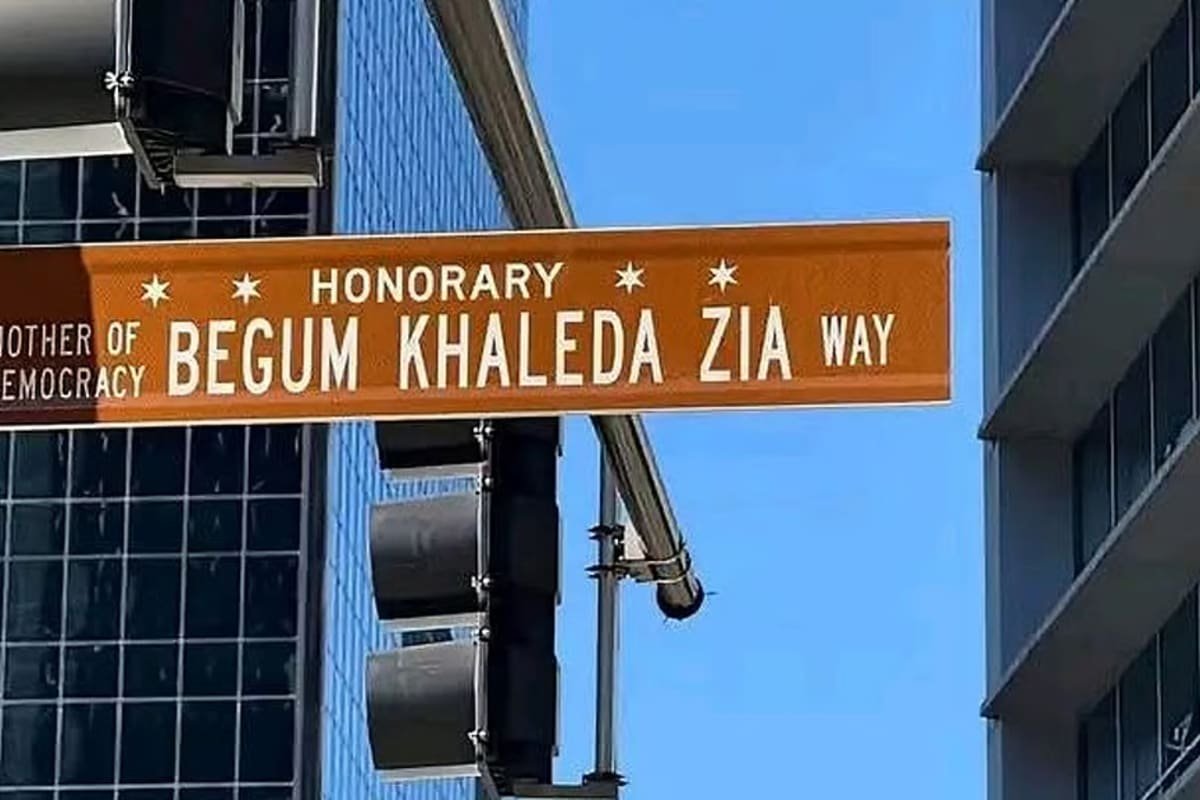
The city of Chicago has officially inaugurated a street named ‘Mother of Democracy Begum Khaleda Zia Way’ in its downtown core to honor the political legacy of the former Bangladeshi Prime Minister. The naming, approved unanimously by the Chicago City Council, recognizes her long-standing struggle for democratic values and her three-term tenure as the head of government in Bangladesh.
The official unveiling ceremony took place on November 22, marking a significant milestone for the Bangladeshi diaspora in the United States. Alderman Gilbert Villegas introduced the proposal to the City Council on September 23, which received full support from local officials before its formal adoption.
Significance of the tribute
Local community leader Shah Mozammel Nantu played a pivotal role in advocating for the street naming. The proposal highlighted Begum Zia’s uncompromising stance in democratic movements and her unique electoral record, which includes winning five parliamentary seats in a single election. Supporters view this recognition as a testament to her enduring influence on the nation’s political landscape.
The street is situated adjacent to the iconic 110-story Willis Tower, which was structurally designed by the renowned Bangladeshi-American engineer Fazlur Rahman Khan. This proximity now places the legacies of two prominent Bangladeshi figures within the same prominent urban corridor in Chicago.
The inauguration event was attended by Bangladesh Ambassador to the United States, Muhammad Ariful Islam, alongside embassy officials and members of the local community. This initiative follows the 2014 naming of ‘Honorary Ziaur Rahman Way’ in the same city, further cementing the presence of Bangladeshi history within Chicago’s public infrastructure.
-

 Politics17 hours ago
Nahid Islam Calls for National Unity to Counter Indian Hegemony
-

 Crime and Justice2 days ago
Man held by mob for using counterfeit notes in Nasirnagar
-

 campus1 day ago
Shobdokunjo celebrates 6th anniversary at JKKNIU
-

 Crime and Justice2 days ago
4 Arrested with Firearms and Drugs in Mohammadpur Operation
-

 International2 days ago
New Mini-Moon 2026 QQ8 Enters Earth’s Orbit Until December