
International
Death toll from Israeli attacks in Gaza reaches 74,000

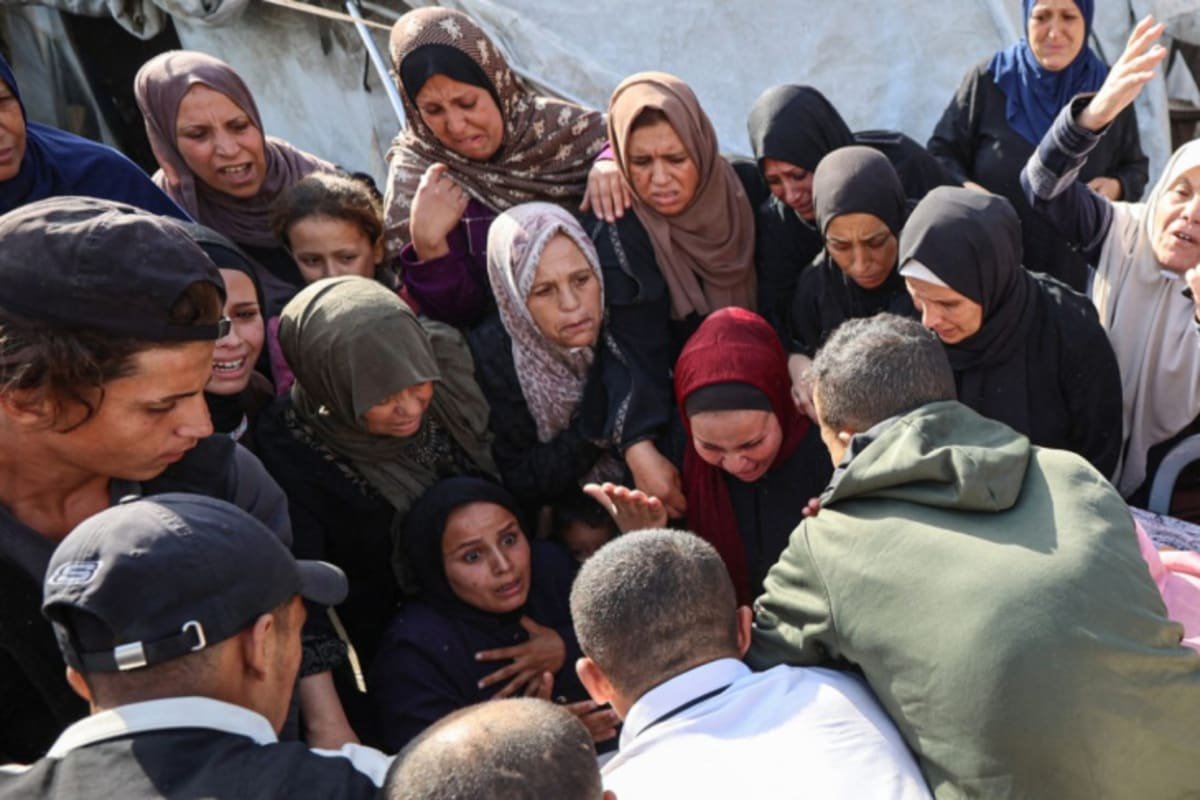
Why it matters: The ongoing conflict in Gaza has reached a new level of horror, with the death toll hitting 74,000 and the humanitarian catastrophe reaching an extreme state.
The director of the Gaza Health Ministry stated that nearly 74,000 Palestinians have been killed and another 175,000 injured in the relentless attacks by Israeli forces.
The big picture: The military operation launched by Israel in Gaza in response to the Hamas attack on 7 October 2023 has now turned into a dire humanitarian crisis. The long-term impact of the war and the lack of aid in the besieged Gaza Strip have further complicated the situation.
Between the lines: Health officials in Gaza are repeatedly calling for the opening of border crossings so that life-saving medicine and essential relief supplies can reach the enclave. Due to the Israeli blockade, the medical system has collapsed, making it nearly impossible to provide proper care to the injured.
What’s next: Although a ceasefire was scheduled to take effect on 10 October 2025, attacks and killings continue in reality. Despite repeated calls for a ceasefire from the international community, no effective signs of peace are yet visible.
The bottom line: Gaza’s health infrastructure is on the verge of destruction, and the minimum opportunities for ordinary people to survive are shrinking. If the borders are not opened immediately, there is a fear that the death toll will rise even more drastically.
By the numbers: In this conflict, 175,000 people have been injured, most of whom are suffering from long-term disabilities or severe physical damage. Every family in Gaza is now a direct or indirect victim of this war, which is being marked as one of the greatest humanitarian tragedies in modern history.
Role of the administration: International human rights organizations have termed this situation a ‘genocide’ and have been demanding an immediate end to Israeli aggression. However, with no permanent solution emerging at the diplomatic negotiating table, the ordinary people of Gaza are living in extreme uncertainty.

Why it matters: For the first time, astronomers are using the game theory concept of a ‘Schelling point’ or focal point in the search for extraterrestrial life, which theoretically increases the probability of receiving a message.
The big picture: Scientists at the SETI Institute have adopted a strategy of pointing telescopes toward the ‘anti-solar point’ in space. This theory assumes that two different civilizations could independently choose a specific location and time in space as a communication hub without any prior contact.
Between the lines: When extraterrestrial beings observe Earth, they would see our planet positioned directly opposite the Sun. Scientists have identified this alignment as a potential location for signal exchange, which could be an effective and logical medium for communication in space.
What’s next: Researchers will use the Allen Telescope Array in Northern California to monitor key parts of Earth’s orbit over the next four years. This long-term mission will collect a massive amount of data, which will be analyzed using automated methods to verify if there are any signs of extraterrestrial technology.
The bottom line: Although no extraterrestrial signals have been detected yet, this method has allowed scientists to view space not just as a recipient, but from the perspective of a potential sender.
By the numbers: During a 17-hour pilot survey, approximately 1.9 million signals were detected from 32 terabytes of data, all of which were human-made radio interference. However, scientists have calculated that if extraterrestrials possess powerful transmitters, it is possible to hear their messages from as far as 124 light-years away.

HEADLINE: Bangladesh Ansar members begin historic journey into Japanese labor market
For the first time, four members of the Bangladesh Ansar and Village Defence Party have received direct job offers after passing the recruitment examination of the Japanese firm Hirata Planning Company Limited.
Why it matters: This is not merely the employment of four individuals, but a milestone for the Bangladesh Ansar and VDP force in entering the international labor market. As a result of long-term training and disciplined living, the force’s members are now proving their competence in world-class workplaces.
The big picture: A rigorous skills assessment and interview process were conducted at the Ansar-VDP Academy in Shafipur, Gazipur, in the presence of a Japanese delegation. The four selected members—Hosne Mokammel Jihad, Md. Imanur Rahman Khan, Md. Rifat Ali, and Rafiqul Islam Robin—have completed six months of training in Japanese language at the N5 and N4 levels. The Japanese representatives highly praised their technical knowledge, linguistic skills, and discipline.
Between the lines: Under the leadership of the force’s Director General Major General Abdul Motaleb Sajjad Mahmud, special initiatives have been taken to develop Ansar members into skilled human resources. To curb the influence of middlemen and brokers, there are plans to ensure safe migration through the force’s own recruiting agency, ‘Prantik Shakti Limited.’ Currently, specialized training programs such as Japanese language and motor driving have been strengthened at the academy.
What’s next: The authorities have set a target to prepare one lakh Ansar members for overseas employment within the next year. Once the visa processing and legal formalities for the four selected members are completed, they will officially begin their careers in Japan. This success will pave the way for sending a larger number of members to the international market in the future.
The bottom line: The modern training system of the Ansar-VDP Academy and this initiative for Japanese language education could add a new dimension to Bangladesh’s remittance inflow. It has created a dignified and safe employment opportunity for the force’s members, which will have a positive long-term impact on the country’s economy.

Why it matters: Israeli Prime Minister Benjamin Netanyahu’s long-standing political dominance has suffered a major blow as President Isaac Herzog has formally tasked opposition leader Gadi Eisenkot with forming a government. This decision signals a significant shift in Israel’s political landscape.
The big picture: A prolonged stalemate emerged after no party secured an absolute majority in the general election held on 27 October. Although Eisenkot’s four-party coalition secured 48 seats, he received support from a total of 67 lawmakers, including those from Arab-led parties, which is significantly higher than the 46 supporters backing Netanyahu.
Between the lines: Forming a government will not be easy for Eisenkot, as he is reluctant to include Arab parties directly in his cabinet. However, if he can secure the support of the ultra-Orthodox Jewish parties United Torah Judaism and Shas, he will be able to reach the magic figure of 61 seats required for a majority.
Netanyahu’s reaction: Fearing the loss of power, Netanyahu has labeled this coalition as ‘dependent on Islamists’ and warned that forming such a government would lead to the collapse of Israel. On the other hand, the Arab parties have stated that their primary goal is to remove Netanyahu from power, and they are prepared to assist Eisenkot even by providing support from the outside.
By the numbers: Eisenkot will have 28 days to form the government, which can be extended by another 14 days if necessary. He needs 61 seats to prove his majority in the 120-seat Israeli parliament, the Knesset.
What’s next: If Eisenkot fails to form a government within the stipulated time, the President will offer the opportunity to someone else. If the second candidate also fails, the parliament can choose a third person. If a government is not formed under any circumstances, a new election will be held in the country within 90 days, and until then, Netanyahu will serve as the caretaker Prime Minister.
The bottom line: Former army chief Gadi Eisenkot now faces the major challenge of uniting a divided Israeli parliament to form a stable government. Whether the Netanyahu era will come to an end depends on Eisenkot’s political strategy.
-

 EDUCATION1 day ago
Education Minister announces new pay scale and end to discrimination for MPO-listed teachers
-

 Health23 hours ago
Rangamati General Hospital superintendent inspects dengue patient care services
-

 International1 day ago
Gadi Eisenkot tasked with forming government, ousting Benjamin Netanyahu
-

 Bangladesh9 hours ago
Munshiganj’s traditional snow-white Mirkadim cattle on the verge of extinction
-
Crime and Justice6 hours ago
Panic in Lohagara following autorickshaw hijacking and head-on bus collision