
Business
Bangladesh Enforces Unified Fertilizer Policy to Break Syndicate Control


Bangladesh has approved a new policy titled the “Integrated Fertilizer Dealer Appointment and Distribution Policy 2025,” aiming to overhaul the country’s fertilizer distribution system. A government gazette issued on Thursday confirmed that the policy will come into effect from Sunday, following approval by the National Coordination and Advisory Committee on Agriculture.
The policy introduces major reforms, including transparent bidding, digital monitoring, stricter eligibility criteria for dealer appointments, a ban on multiple dealerships within a family, and the abolition of the longstanding sub-dealer system. According to the Ministry of Agriculture, the primary objective is to dismantle monopolistic control and syndicate-based manipulation in fertilizer distribution. An influential group of transport contractors and dealers had long been accused of hoarding fertilizers and creating artificial shortages, forcing farmers to buy at higher prices.
Under the new framework, the dual dealership structure of BADC and BCIC has been merged into a single system. Fertilizers from all sources—government, semi-government, or private—will now be distributed under one unified policy. Each union, municipality, and city corporation will have a fixed number of dealer units, and every dealer must operate three designated sales centers displaying subsidy and pricing information. All transactions, withdrawals, and records must be maintained digitally.
The policy bars government employees, public representatives, individuals convicted in criminal cases, and multiple members of the same family from becoming dealers. The security deposit has been raised to Tk 400,000, while the renewal fee has been set at Tk 1,000. Dealer performance will be routinely assessed, with provisions for renewal or cancellation based on evaluation.
Vacant dealer units will be filled through recommendations from upazila and district fertilizer and seed monitoring committees. District administrations must publish lists of vacant units alongside recruitment notices. All fertilizer dealers will be registered and listed under the new policy.











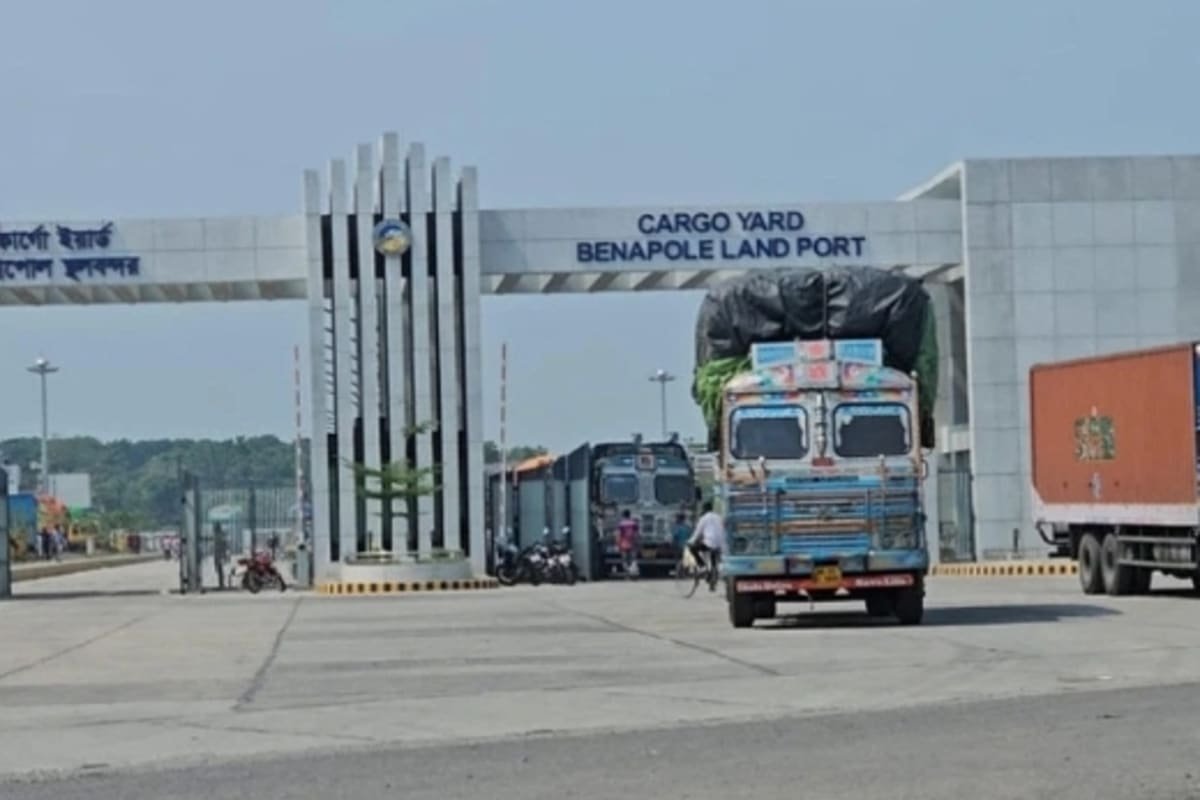
Why it matters: Due to public holidays in India for Diwali and Kali Puja, import-export operations at the Benapole-Petrapole land port are completely suspended on Monday, causing a temporary halt in trade supply between the two countries.
The big picture: Although the movement of goods-laden trucks between India and Bangladesh has been stopped since Monday morning, internal administrative activities at the Benapole Customs House and the port remain normal. At the same time, the movement of passport-holding passengers through the Benapole International Checkpost continues without any hindrance.
Between the lines: The Petrapole Port Clearing Agents Staff Welfare Association had previously informed Bangladeshi traders about the suspension of trade through a letter. Since operations at the Petrapole port and customs were closed from Sunday afternoon, it was not possible to unload or transport goods on Monday.
By the numbers: Every day, approximately 300 to 350 trucks carrying goods enter Bangladesh from India through the Benapole port, while 100 to 150 trucks travel from Bangladesh to India. The government earns about 100 million BDT in revenue daily from this port, a large portion of which depends on import-export trade.
What’s next: Leaders of the relevant business associations have confirmed that import-export operations between the Benapole and Petrapole ports will resume on Tuesday morning. Acting Director of the port, Ruhul Amin, stated that the unloading of goods-laden trucks currently stuck at the port is ongoing, and regular commercial activities will commence from Tuesday.
The bottom line: This one-day break due to religious festivals will not have a major impact on the commercial sector, as passenger movement and internal office work at the port remain operational.

A rare Shapla Pata fish weighing 10 maunds (approximately 370 kg) was caught in the nets of fishermen in Hatiya, Noakhali, creating significant excitement among locals. The fish was auctioned on Thursday at Danardol fish market in Burirchar Union, selling for Tk 131,000 — despite the species being legally prohibited for capture and trade.
The fish was caught late Wednesday night near a gas well in the Meghna estuary. It became trapped in the behundi net of fisherman Kamal Majhi, known locally as “Malaysia Majhi.” The weight of the catch was so unusual that the 15 fishermen aboard were unable to pull the net up on their own, prompting the crew to seek help from a nearby boat. With combined effort, the massive fish was eventually hauled aboard and taken to the local fish market.
Local trader Khabir Uddin purchased the fish at auction, saying that Shapla Pata fish has strong demand in major markets, and he expects to earn a profit of around Tk 20,000.
However, Hatiya Upazila Fisheries Officer Md. Fayzur Rahman clarified that the Shapla Pata fish is listed as an endangered species under Bangladesh’s wildlife conservation law, making it illegal to catch or sell. He stressed that the species plays an important role in preserving marine biodiversity.
Despite the legal restrictions, the capture and sale of the fish sparked widespread discussion across the area.

Bangladesh has increased the prices of all types of fuel by Tk 2 per litre for the month of December. The revised rates will come into effect on Monday, 1 December, according to a notification issued by the Ministry of Power, Energy and Mineral Resources on Sunday.
The ministry stated that the adjustment follows the country’s automated fuel pricing mechanism, which aligns domestic prices with fluctuations in the global energy market. Authorities say the move aims to ensure fuel supply at relatively affordable rates for consumers.
Under the new pricing structure, diesel will rise from Tk 102 to Tk 104 per litre, octane from Tk 122 to Tk 124, petrol from Tk 118 to Tk 120, and kerosene from Tk 114 to Tk 116 per litre.
Officials have indicated that monthly adjustments will continue in line with global market movements.
-

 International1 day ago
Fire in 40-storey building in China’s Shanxi leaves 14 dead
-

 International13 hours ago
Trump Declares Iran War ‘Effectively Over’ as Tehran Rejects Claim
-

 Crime and Justice1 day ago
Moving bus set on fire in Farmgate as instability and panic rise in capital
-

 Crime and Justice8 hours ago
Jashore teacher arrested for raping fourth-grade student
-

 Crime and Justice7 hours ago
20 injured as protesters torch police vehicle in Tungipara