
Economy
Ashulia garment factories shut indefinitely amid ongoing worker unrest

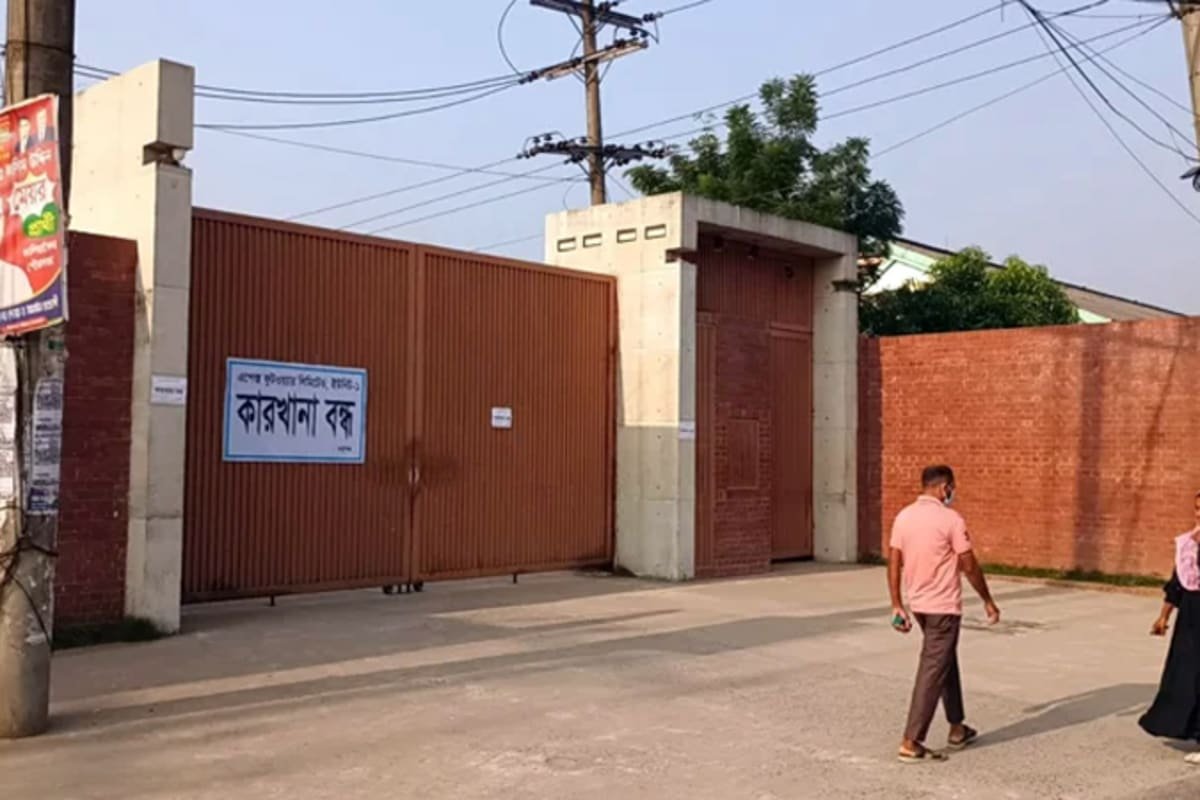
Authorities have declared an indefinite shutdown of 20 garment factories in the Ashulia industrial belt following persistent worker unrest and the absence of a resolution from the wage board. The closure, enforced under Section 13(1) of the Labour Act, highlights a deepening crisis in the apparel sector that threatens national export targets. Workers have staged work stoppages demanding a wage structure that aligns with the rising cost of living, while factory owners cite mounting operational costs as a barrier to meeting these demands.
The industrial landscape remains tense as workers continue to press for higher pay to cope with inflation. While the wage board has held discussions, the lack of a definitive outcome has fueled frustration among the workforce. Owners argue that high energy costs and a decline in international purchase orders have severely squeezed their profit margins, making significant wage hikes financially unsustainable for many enterprises.
Data from the industrial police indicates that beyond the 20 factories closed indefinitely, 10 facilities declared a general holiday on Tuesday. Additionally, workers at nine other factories reported for duty but refused to participate in production activities. This form of peaceful protest, where workers remain inside the premises without engaging in vandalism, has effectively halted operations while keeping the situation from escalating into physical violence.
Industrial police officials stated that they are monitoring the situation closely to prevent any potential unrest. They confirmed that while most factories in the region are operating normally, production remains severely disrupted in the affected units.
Industry experts warn that the ongoing deadlock poses a significant risk to the country’s export-oriented economy. A swift and balanced resolution between the wage board, factory owners, and labor representatives is considered essential to restore stability. Without a compromise that addresses worker welfare while maintaining industrial viability, the sector faces the prospect of prolonged instability and missed production targets.

Garment worker representatives have officially rejected the latest wage proposal submitted by factory owners, raising concerns over potential instability in the country’s primary export sector. The rejection occurred during a meeting of the Minimum Wage Board, where both parties failed to reach a consensus on a new pay structure for millions of workers. This ongoing impasse highlights the deepening divide between labor demands and industry affordability.
Labor leaders argued that the proposal put forward by the owners failed to meet the basic expectations of the workforce. While the specific figures of the new offer remain undisclosed, representatives indicated that the amount is insufficient to cover the rising cost of living. Negotiations are currently underway to seek a middle ground that prevents further unrest in the garment industry.
Background of the Dispute
Previously, worker representatives demanded a minimum wage of 32,000 taka, citing high inflation and the increased cost of essential goods. Factory owners dismissed this demand as unreasonable, leading to a prolonged stalemate that has persisted for several weeks. The industry remains under pressure to balance competitive production costs with the economic survival of its massive labor force.
Labor representative Babul Akhter said, “The proposal presented by the owners failed to meet the workers’ expectations, and we are currently attempting to reconsider the terms through further dialogue.”
Minimum Wage Board Chairman Syed Azad Subhani confirmed that discussions are ongoing and a final decision will only be reached after further consultations. The board intends to continue mediating between the two parties to establish a sustainable wage structure. Observers expect the bargaining process to remain tense until a formal announcement is made regarding the new minimum wage.
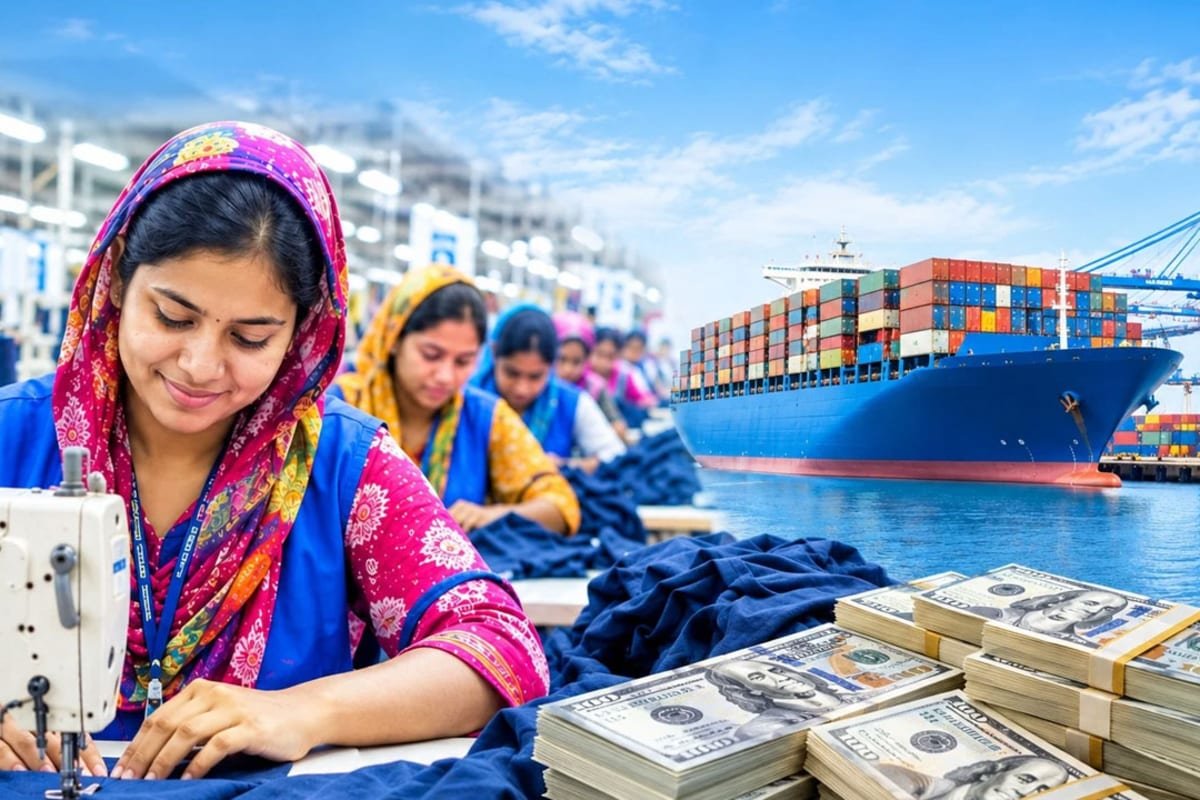
Bangladesh’s readymade garment (RMG) sector has rebounded significantly, surpassing $10.54 billion in export earnings during the first three months of the current fiscal year (July-September). This achievement marks a 6.25 percent increase compared to the same period last year, signaling a robust recovery for the nation’s primary export industry despite global economic volatility and internal challenges.
The garment sector currently accounts for 80.79 percent of the country’s total export earnings. Knitwear exports contributed $5.94 billion, reflecting a 7.02 percent growth, while woven garment exports reached $4.60 billion. This performance indicates a temporary recovery in global demand for Bangladeshi apparel products.
Market Concentration and Net Earnings
Approximately 72.11 percent of total garment exports are destined for just nine countries, including the United States, the United Kingdom, Germany, and Spain. After deducting the costs of imported raw materials, the net export earnings for this quarter stood at $6.77 billion, representing an 11.20 percent increase over the previous year.
Challenges to Sustainable Growth
Despite the rise in export earnings, the industry faces significant risks from increasing production costs, geopolitical tensions, and an over-reliance on specific markets. The stagnation in woven garment growth and uncertainties surrounding global trade policies remain primary concerns for entrepreneurs. Addressing these vulnerabilities is essential to maintaining the sector’s long-term competitive edge in the international market.
Strategic Recommendations
Bangladesh Bank has advised the industry to prioritize market diversification, the production of high-value-added goods, and environmentally sustainable industrialization. Experts emphasize that increasing productivity and controlling production costs are critical to remaining competitive. Achieving this $10 billion milestone proves the sector’s resilience, but expanding the global market footprint remains the core challenge for sustainable future growth.

Bangladesh is witnessing a significant shift in remittance sources as inflows from Australia and Canada continue to rise, offering a vital boost to the nation’s foreign exchange reserves. During the first four months of the 2026-27 fiscal year, from July to October, these two developed nations contributed a combined $172.33 million to the economy. This trend highlights the growing presence of skilled Bangladeshi professionals in these countries and signals a positive diversification of the country’s foreign currency earnings.
Data from the central bank shows that Australia accounted for $93.59 million, while Canada contributed $78.74 million during this period. These figures represent approximately 1.5 percent of the total remittance inflow, marking a departure from the traditional reliance on Middle Eastern labor markets. This growth reflects both the increasing number of skilled migrants and a shift toward more stable, high-income economies.
Banking Sector Reforms
Bangladesh Bank spokesperson Arif Hossain Khan attributed this growth to improved banking services and increased migrant confidence in legal channels. He noted that the government and the central bank have implemented stricter policies to curb illegal ‘hundi’ transactions while simplifying the remittance process. These measures have successfully encouraged expatriates to utilize formal banking systems for sending their earnings home.
Bangladesh Bank spokesperson Arif Hossain Khan said, “The rise in remittances is not merely a result of higher migrant numbers, but a reflection of growing trust in legal banking channels and the enhancement of service quality.”
Economic Outlook
Between July and October, Bangladesh received a total of $11.46 billion in remittances. While Saudi Arabia remains the top source with $2.19 billion, followed by the United Kingdom, the United States, the UAE, and Malaysia, the emerging contribution from Australia and Canada is strategically significant. Economists suggest that diversifying these sources is essential for long-term macroeconomic stability.
Economist Dr. Zahid Hossain said, “To strengthen the economic foundation, we must increase the export of skilled manpower to developed nations alongside traditional labor markets. Reducing dependency on a few specific countries will accelerate the rebuilding of our foreign exchange reserves.”
-

 International2 days ago
New Mini-Moon 2026 QQ8 Enters Earth’s Orbit Until December
-

 Bangladesh2 days ago
Farmers slap agriculture official in Manikganj over severe fertilizer crisis
-

 Politics21 hours ago
Nahid Islam Calls for National Unity to Counter Indian Hegemony
-

 Crime and Justice2 days ago
Man held by mob for using counterfeit notes in Nasirnagar
-

 campus2 days ago
Shobdokunjo celebrates 6th anniversary at JKKNIU