
International
At least 20 killed as bus catches fire in Rajasthan’s Jaisalmer

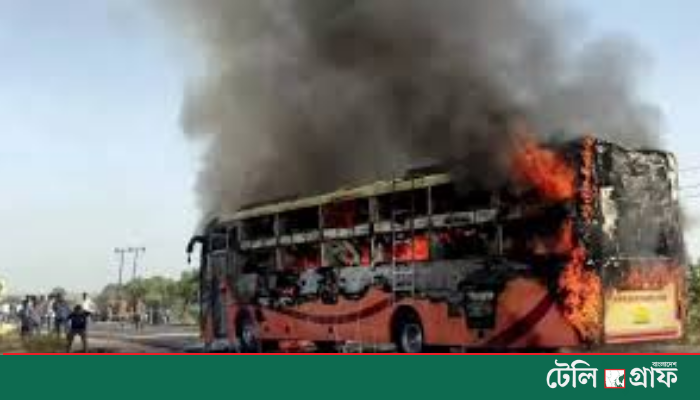
At least 20 people have been killed after a passenger bus caught fire in Rajasthan’s Jaisalmer district on Tuesday (October 14) afternoon. The bus was travelling from Jaisalmer to Jodhpur when the accident occurred.
Police said the bus, carrying 57 passengers, left Jaisalmer around 3 p.m. Shortly afterward, smoke was seen coming from the rear of the vehicle. The driver stopped the bus on the roadside, but within minutes, flames engulfed the entire bus.
Locals rushed to help the passengers and informed the fire brigade and police, who later brought the blaze under control. Initial investigations suggest that an electrical short circuit may have triggered the fire.
Fifteen passengers, including four women and two children, sustained severe burns, with some suffering burns over 70% of their bodies. The injured were taken to Jaisalmer’s Jawahar Hospital and later shifted to Jodhpur for advanced treatment.
District authorities launched an immediate rescue and relief operation. Officials confirmed that the bus was completely gutted, making it difficult to identify many of the victims. DNA and forensic teams from Jodhpur have been deployed to assist with the identification process.
Rajasthan Chief Minister Bhajan Lal Sharma visited Jaisalmer late Tuesday night. Indian Prime Minister Narendra Modi expressed his condolences and announced financial aid of ₹2 lakh each for the families of those killed.
(Source: NDTV)











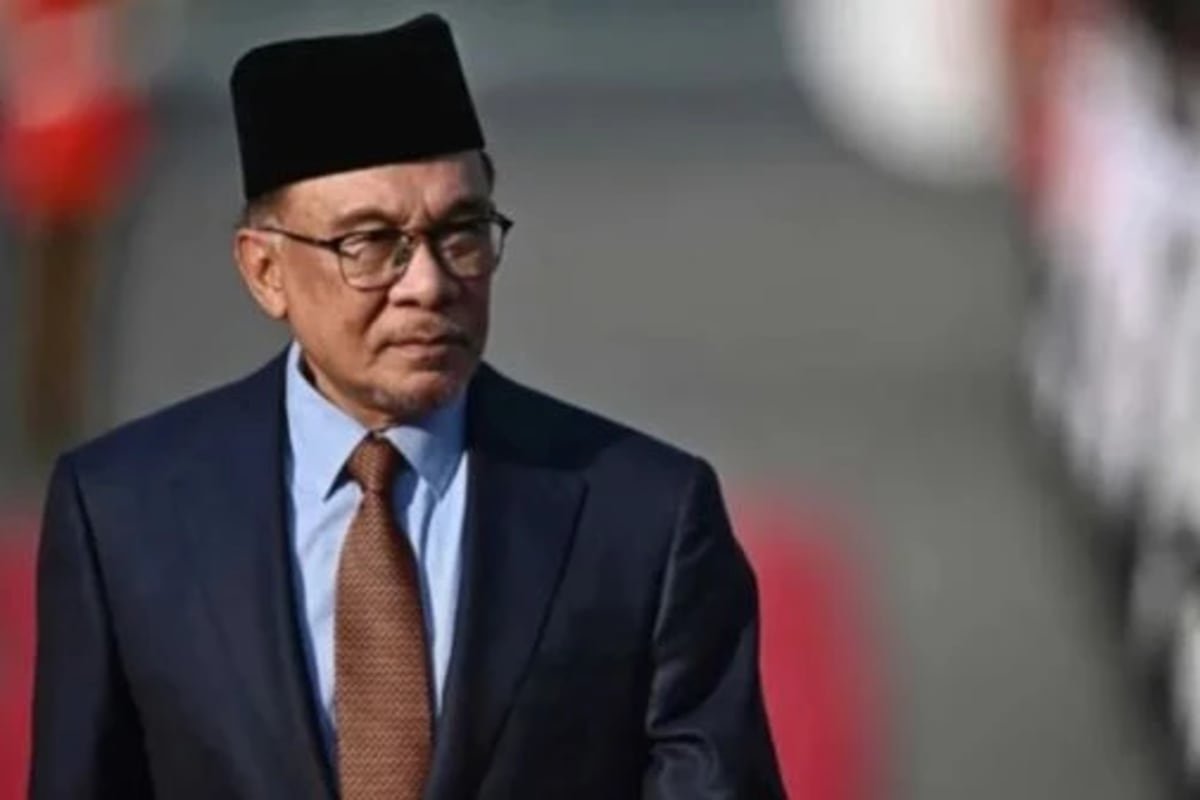
Malaysian Prime Minister Anwar Ibrahim has postponed his scheduled visit to Dhaka, originally set for December 7 and 8, citing internal political instability within his country. The cancellation has stalled critical diplomatic and commercial discussions between the two nations, including negotiations on migrant worker recruitment, trade, energy, and defense cooperation. The Malaysian government confirmed the decision through a diplomatic note on Friday, promising to coordinate a new schedule for the visit in the near future.
The visit was expected to address several pressing bilateral issues, including the rights of migrant workers and potential new investments. Analysts suggest that the postponement will inevitably delay decision-making on these key areas, creating a temporary pause in high-level diplomatic engagement between Dhaka and Kuala Lumpur.
Background of the Visit
The Prime Minister’s Office had officially confirmed the dates for the visit on November 22. Alongside the Dhaka trip, Anwar Ibrahim also cancelled his planned visit to Thailand due to the same domestic circumstances. Diplomatic channels are now working to reschedule the visit, though Malaysia has not provided specific details regarding the nature of the internal political challenges currently facing the administration.
Diplomatic Relations
This development follows a period of active engagement between the two nations. Prime Minister Anwar Ibrahim previously visited Bangladesh on October 4, where he held high-level talks with Chief Adviser Professor Muhammad Yunus. Prior to that, the Chief Adviser had visited Malaysia in June, marking his first official foreign trip since assuming office. Both nations remain committed to resolving pending bilateral issues once the current political situation in Malaysia stabilizes.
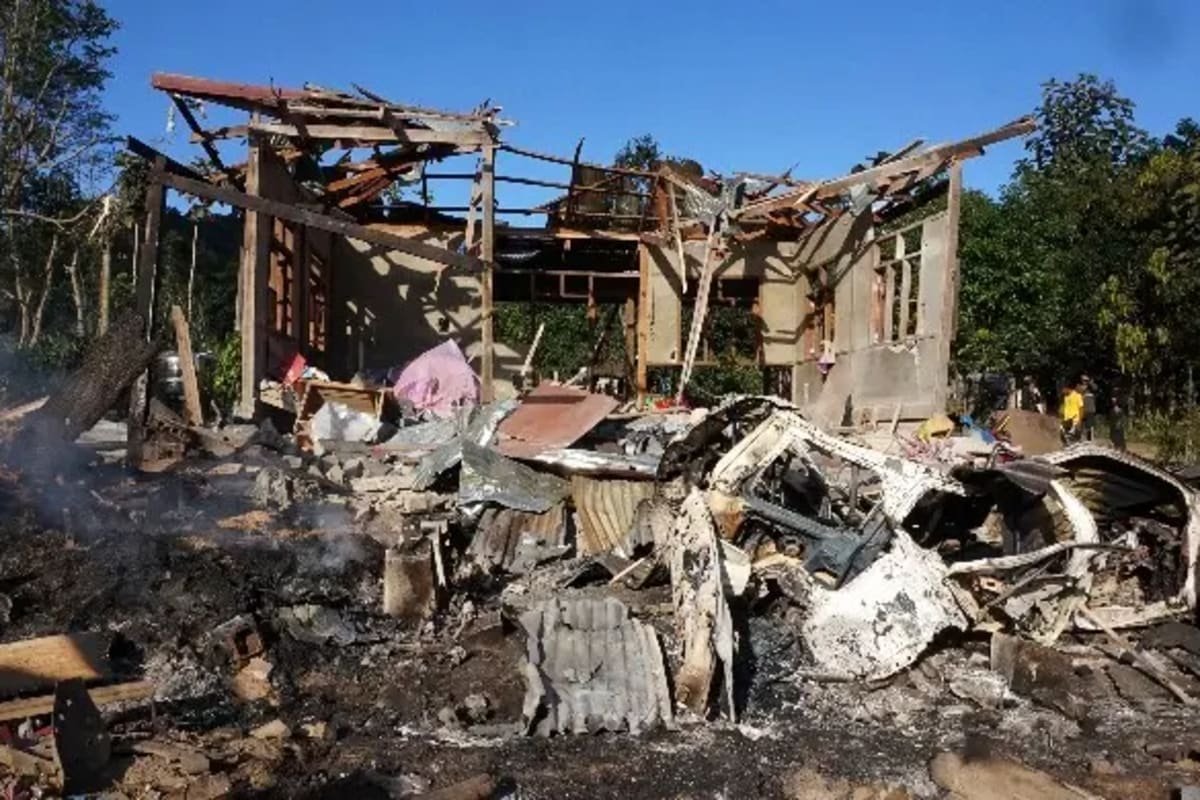
At least 21 civilians, including five children, were killed when a Myanmar military airstrike targeted a wedding ceremony in the Moe Bye area near the border of Shan and Karenni states. The attack, which occurred during a celebration for two displaced individuals, also left more than 40 people injured. Witnesses reported that military aircraft returned to strike the site again while rescue operations were underway, significantly complicating efforts to save survivors.
The incident has drawn international condemnation as the death toll continues to rise in the conflict-torn region. Local reports indicate that the lack of available transport vehicles hindered the evacuation of the wounded to nearby medical facilities, leaving rescue workers struggling to manage the crisis. Graphic footage from the scene captured the aftermath, showing debris and the distress of survivors in the wake of the bombardment.
The military junta continues to conduct indiscriminate airstrikes in regions where opposition forces maintain influence, despite the area being nominally under government control. This latest tragedy follows the recent International Court of Justice ruling on the Rohingya genocide, further intensifying global pressure on the ruling junta.
Since the 2021 military coup, the ongoing civil war in Myanmar has claimed more than 100,000 lives. The military has frequently targeted civilian gatherings in contested territories as part of its broader campaign against resistance groups. Despite the severity of the attack and the resulting civilian casualties, the military junta has not yet issued an official statement or comment regarding the incident.

Astronomers have captured the first direct evidence of a dying star’s final thermal pulse, providing unprecedented insights into stellar evolution. Using the Atacama Large Millimeter/submillimeter Array (ALMA) in Chile, researchers observed the star IRAS 06530-0213, located 12,000 light-years from Earth. This rare observation reveals the intense nuclear activity that occurs as sun-like stars transition into their final red giant phase.
As a star exhausts its core hydrogen, it loses gravitational equilibrium and begins to expand rapidly. During this phase, internal thermal pulses trigger powerful explosions that eject gas and dust into space, eventually forming a planetary nebula. This process marks the dramatic end of a star’s life cycle, scattering essential elements across the cosmos.
The observation confirms that stellar death is not a silent process but a complex, explosive event that shapes the chemical composition of the universe.
Data indicates that the gas shell surrounding the star spans approximately half a light-year and was ejected roughly 6,500 years ago. Furthermore, the star’s hourglass-shaped nebula began forming only 700 years ago, a remarkably short duration in cosmic terms. These findings challenge existing theoretical models regarding how stars distribute materials into space.
Researchers identified heavy isotopes of carbon, oxygen, and nitrogen that do not align with current scientific predictions. Scientists are now analyzing these discrepancies to refine models of how sun-like stars synthesize elements and conclude their life cycles. This discovery serves as a critical step in understanding how dying stars provide the raw materials necessary for the birth of new celestial bodies.
-

 Economy15 hours ago
Jashore’s Date Molasses Industry Targets Tk 125 Crore Revenue This Season
-

 Crime and Justice2 days ago
Chinese national arrested for raping 15 women after luring them via TikTok
-

 Crime and Justice2 days ago
Petrol bombs hurled at Grameen Bank branch in Barishal
-

 Crime and Justice18 hours ago
Police Detain 37 Women for Pickpocketing at Azhari’s Mahfil in Rajshahi
-

 Bangladesh2 hours ago
BNP-backed panel secures landslide victory in Jashore Bar Association election