
International
Israeli President Herzog Condemns Settler Violence Against Palestinians as ‘Affront to God’

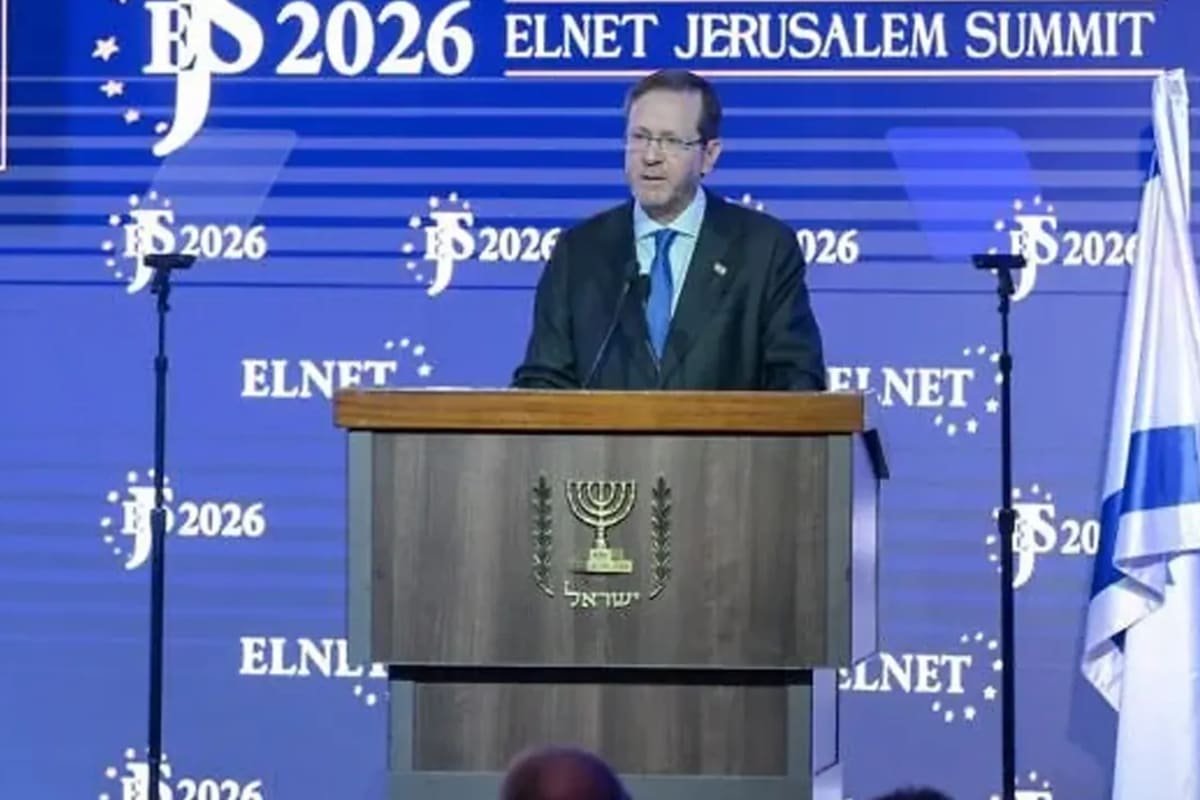
Israeli President Isaac Herzog has strongly condemned the recent surge in violence by Jewish settlers against Palestinians in the occupied West Bank, labeling the attacks a moral and religious transgression. Addressing the ELNET conference in Jerusalem, Herzog described the arson and property destruction as an ‘affront to God’ that contradicts core Jewish values. This condemnation arrives amid mounting international pressure on the Israeli government to curb extremist activities in the region.
The violence escalated last Saturday night when extremist settlers set fire to over a dozen vehicles and several homes in Palestinian villages near Ramallah. President Herzog emphasized that such acts of lawlessness are fundamentally incompatible with Israel’s moral standing and historical traditions. He reiterated that the state remains committed to upholding the rule of law despite the ongoing tensions.
Internal Political Criticism
The surge in settler violence has ignited a fierce debate within Israeli domestic politics. Former Prime Minister Naftali Bennett criticized the current administration, accusing authorities of turning a blind eye to what he termed ‘Jewish terrorism.’ Critics argue that the government’s perceived inaction is exacerbating the security crisis and further complicating the already volatile situation in the West Bank.
President Isaac Herzog said, “These acts of violence are an affront to God and a stain on our moral character that we must address with the full force of the law.”
International concern regarding the safety of Palestinians has reached a critical point, with several nations demanding accountability for the perpetrators. While the United Kingdom and various European countries have called for immediate legal action, Australia has moved to impose sanctions on specific settlers involved in the violence. These diplomatic moves reflect a growing global consensus that the current level of instability is unsustainable.
President Herzog assured diplomats at the conference that Israeli security forces are actively working to address this moral failure. He confirmed that authorities are currently identifying and arresting those responsible for the attacks to ensure they face swift justice. The government now faces the challenge of demonstrating its effectiveness in curbing extremism while navigating intense scrutiny from the international community.

Despite the conclusion of the 31st UN Climate Change Conference (COP31) in Antalya, Turkey, without a final agreement, Bangladesh successfully secured 1.05 billion taka in climate grant commitments. The summit ended without a consensus on fossil fuel reduction or adaptation financing, marking the first time since the 2009 Copenhagen summit that a COP event concluded without a formal document. This outcome highlights significant challenges in global climate diplomacy for vulnerable nations.
The conference failed to establish a concrete roadmap for loss and damage funding, leaving many developing nations disappointed. Global leaders struggled to reach an agreement on the 120 billion dollar global adaptation target, exposing deep divisions in international climate policy. This lack of a final accord underscores the growing fragility of global efforts to combat climate change effectively.
Strategic Funding Success
Bangladesh secured approximately 682 million taka from the Global Shield and 373 million taka from the Climate Investment Fund. These funds represent a vital diplomatic achievement for the country amidst the broader failure of the summit to deliver comprehensive global solutions. The government now aims to expedite the disbursement process to ensure these resources are utilized effectively for climate resilience projects.
Prime Minister’s Special Assistant for Environment, Forest and Climate Change Dr. Saimum Parvez said, “Despite the global disappointment, securing this funding is a significant diplomatic success for Bangladesh.”
Moving forward, the government plans to explore new funding avenues through partnerships with international organizations like the Global Mangrove Alliance. Bangladesh also intends to pursue carbon trading agreements with Singapore and support the Global Rooftop Solar Declaration. The administration remains committed to advocating for grant-based assistance rather than loan-based financing to address the ongoing climate crisis.
Iran has formally demanded $290 billion in compensation from the United States, citing decades of damages caused by American actions, while simultaneously issuing a stern warning regarding potential military responses to naval blockades. The Iranian judiciary has reportedly issued rulings against the US for this substantial sum, escalating tensions in the Middle East. Tehran has characterized the ongoing naval restrictions not merely as economic sanctions, but as direct military aggression against the nation.
Legal and Military Stance
Tehran has initiated legal proceedings against both the United States and several Gulf Arab nations, accusing the latter of facilitating US military operations. Citing Article 51 of the UN Charter, Iranian officials asserted their right to self-defense, which includes the potential for strikes against US military installations. This legal strategy aims to exert international pressure while signaling a readiness to escalate if regional security remains compromised.
Economic Impact and Strategic Risks
More than 80 percent of Iran’s total imports and exports transit through the Strait of Hormuz or its southern ports. The naval blockade has placed severe strain on the Iranian economy, forcing the government to seek alternative trade routes. This strategic vulnerability has turned the waterway into a flashpoint, with Tehran warning that any further interference could trigger a significant military confrontation.
Iranian Foreign Ministry Spokesperson Esmaeil Baghaei said, “We view the US naval blockade as a direct act of military aggression rather than simple economic sanctions.”
Diplomatic Impasse
Diplomatic efforts to resolve the crisis remain stalled following the collapse of draft negotiations in June. Iranian officials claimed that if the United States lifts the naval blockade and removes existing sanctions, normal operations in the Strait of Hormuz could be restored within 48 hours. However, with no new progress reported, the prospect of a diplomatic breakthrough remains highly uncertain.

Data from the European statistical agency Eurostat for 2025 reveals that approximately 74 percent of households in Greece have no children under the age of 18. This stark demographic shift highlights a deepening crisis that threatens the nation’s future workforce and social security framework, as only 26 percent of Greek families currently raise minor children.
Out of 4.05 million total households in Greece, 2.99 million are currently childless. Among the minority of families with children, only 149,000 households report having three or more, underscoring a persistent downward trend in birth rates across the country.
A Broader European Trend
This demographic challenge is not isolated to Greece but reflects a wider pattern across the European Union. Recent statistics indicate that 76.6 percent of households throughout the EU lack minor children, serving as a significant warning regarding the continent’s shrinking population and aging demographic profile.
Economic and Social Implications
Experts warn that the prevalence of childless households poses long-term risks to Greece’s economic growth and the sustainability of its social welfare systems. As the proportion of elderly citizens increases, the nation faces the prospect of a severe labor shortage that could stifle productivity and economic stability in the coming decades.
Demographic experts suggest that the government must urgently re-evaluate family support policies and implement effective strategies to encourage birth rates to mitigate the looming labor crisis.
Government officials and policymakers are now engaged in a growing debate over how to address these structural changes. Current data shows that among the 26.2 percent of Greek families with children, 495,000 have one child, 418,000 have two, and only 149,000 support three or more.
-
 Politics1 day ago
Nahid Islam Calls for National Unity to Counter Indian Hegemony
-

 campus2 days ago
Shobdokunjo celebrates 6th anniversary at JKKNIU
-

 Economy1 day ago
Garment Workers Reject Employers’ New Wage Proposal Amid Ongoing Deadlock
-

 Crime and Justice15 hours ago
Police Arrest BCL Activist for Muksudpur Police Station Attack and Social Media Celebration
-
 Bangladesh14 hours ago
Actor Sohel Khan Dies of Cardiac Arrest on Shooting Set in Bogura