International
Over 2,500 detained at anti-war protests in Russia – monitoring group

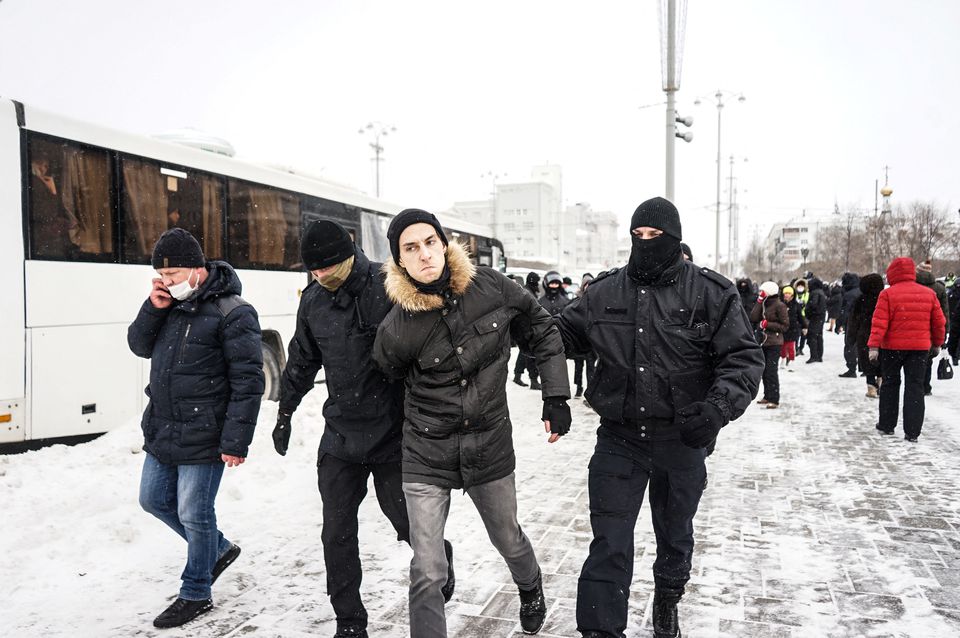
LONDON, March 6 (Reuters) – More than 2,500 people were detained at protests on Sunday in 49 cities across Russia against President Vladimir Putin’s invasion of Ukraine, according to an independent Russian-based protest monitoring group.
Thousands of protesters chanted “No to war!” and “Shame on you!”, according to videos posted on social media by opposition activists and bloggers. The OVD-Info protest monitoring group said 2,502 people had been arrested.
Dozens of protesters in the Urals city of Yekaterinburg were shown being detained. One protester there was shown being beaten on the ground by police in riot gear. A mural in the city showing President Vladimir Putin was defaced.
Reuters was unable to independently verify the footage and photographs on social media or to reach Russia’s interior ministry for comment.
“The screws are being fully tightened – essentially we are witnessing military censorship,” Maria Kuznetsova, OVD-Info’s spokeswoman, told Reuters by telephone from Tbilisi.
“We are seeing rather big protests today, even in Siberian cities where we only rarely saw such numbers of arrests.”
The ministry warned on Saturday that any attempt to hold unauthorized protests would be prevented and the organizers held to account. It did not immediately publish data on arrests.
Police used loudspeakers to tell a small group of protesters in Khabarovsk: “Respected citizens, you are taking part in an unsanctioned public event. We demand you disperse.”
Some Russian state-controlled media carried short reports about the protests.
Russia’s RIA news agency said the Manezhnaya Square in Moscow, adjoining the Kremlin, had been “liberated” by police who had arrested some participants of an unsanctioned protest against the military operation in Ukraine.
CHURCH SUPPORT
RIA also showed footage of what appeared to be supporters of the Kremlin driving along the embankment in Moscow with Russian flags and displaying the “Z” and “V” markings used by Russian forces on tanks operating in Ukraine.
Patriarch Kirill, head of the Russian Orthodox Church, said Russian values were being tested by the West, which offered only excessive consumption and the illusion of freedom.
Putin, Russia’s paramount leader since 1999, calls the invasion, launched on Feb. 24, a “special military operation”. He says it is aimed at defending Ukraine’s Russian-speaking communities against persecution and preventing the United States from using Ukraine to threaten Russia.
The West has called his arguments a baseless pretext for war and imposed sanctions that aim to cripple the Russian economy. The United States, Britain, and some other NATO members have supplied arms to Ukraine.
Jailed Kremlin critic Alexei Navalny had called for protests on Sunday across Russia and the rest of the world against the invasion.
About 2,000 people attended an anti-war protest in Kazakhstan’s biggest city Almaty, according to videos posted on social media. Reuters was unable to independently verify the posts.
The crowd shouted slogans such as “No to war!” and obscenities directed at Putin while waving Ukrainian flags.
Blue and yellow balloons were placed in the hand of a statue of Lenin towering over the small square where the rally took place.
The Russian state polling agency VTsIOM said Putin’s approval rating had risen 6 percentage points to 70% in the week to Feb. 27. FOM, which provides research for the Kremlin, said his rating had risen 7 percentage points to 71% in the same period.

International
Indian BJP MP makes controversial claims over ‘reclaiming’ Noakhali, Sylhet, and Chattogram

Why it matters: The claim made by Nishikant Dubey, a Lok Sabha member from India’s ruling BJP, regarding Bangladeshi territory could spark fresh tensions in diplomatic relations between the two countries and has become a cause for concern regarding regional stability.
The big picture: Jharkhand MP Nishikant Dubey has claimed that India’s first Prime Minister, Jawaharlal Nehru, forcibly handed over the regions of Noakhali, Sylhet, and Chattogram—which he alleged were part of the then-state of Tripura—to Pakistan. He alleged that due to this historical mistake by Nehru, India’s northeastern states have lagged behind economically, and India faces a strategic crisis as the Chattogram port is not under Indian control.
Between the lines: The underlying motivation behind Nishikant Dubey’s statement is the security and economic connectivity of India’s northeastern region. Pradyot Bikram Manikya Debbarma, a descendant of the Tripura royal family, has supported this claim, stating that if the Chattogram port were under Indian control, the pressure on the ‘Chicken’s Neck’ or Siliguri Corridor would decrease, and India’s security apparatus would be further strengthened.
What’s next: Such provocative remarks could create misunderstandings between the two neighboring countries and fuel public resentment. Although this is being viewed as the personal or political ideology of an individual MP, it has raised concerns about a potential negative impact on India-Bangladesh bilateral relations in the international arena.
The bottom line: Nishikant Dubey has been in the spotlight for various controversial comments in the past, and analysts view this new claim as a provocative move in South Asian geopolitics.
By the numbers: The history cited by Dubey regarding the 1946 Noakhali riots and the complexities of border demarcation during the partition remains a subject of historical debate, which is now being used as a political tool.
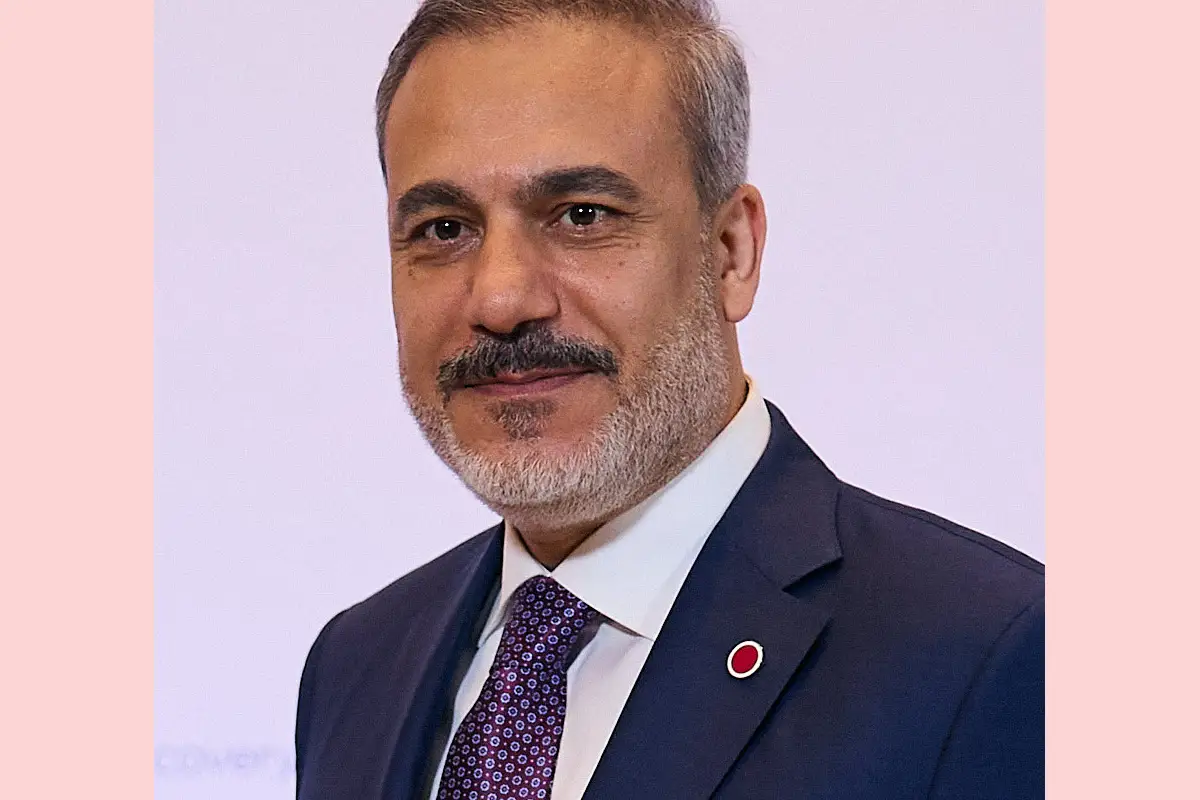
Turkish Foreign Minister Hakan Fidan kicks off a three-day official visit to Dhaka on June 4, looking to shift the relationship from standard trade into a serious defense and political alliance.
Why it matters:
This trip is a big deal for a few reasons. It is the first time a Turkish foreign minister has visited Bangladesh since December 2020. More importantly, it is the first high-level visit from a major partner since Prime Minister Tarique Rahman’s BNP-led government took office. Ankara is moving fast to engage with the new administration, showing a clear intent to lock in its influence in South Asia.
The big picture:
Turkey no longer sees Bangladesh as just a market for goods or a source of labor. The real goal here is to expand defense cooperation and build a lasting political partnership. Both nations want to align their foreign policies to present a united front on the global stage. This visit builds directly on Bangladesh Foreign Minister Dr. Khalilur Rahman’s trip to Ankara in April, where the groundwork for these bigger plans was laid.
Between the lines:
While the official statements talk about diplomatic courtesy and economic growth, the quiet focus is on military hardware. Ankara wants to sell advanced defense technology to Bangladesh as Dhaka modernizes its armed forces. Additionally, Turkey has been a vocal supporter of Bangladesh during the Rohingya crisis. Fidan might visit the refugee camps in Cox’s Bazar to get a firsthand look at the situation, proving Turkey’s ongoing political backing.
By the numbers:
- 3: The number of days Fidan will be in Bangladesh.
- 5.5: Years since the last official visit by a Turkish Foreign Minister to Dhaka.
- 2: The major meetings scheduled before seeing the PM, sitting down with Foreign Minister Dr. Khalilur Rahman and State Minister Shama Obaed Islam.
What’s next:
The visit wraps up on June 6 with a pivotal meeting between Fidan and Prime Minister Tarique Rahman. During this sit-down, expect the two leaders to nail down agreements that speed up investments and finalize new defense deals. They are also expected to get on the same page regarding Middle Eastern conflicts, especially Gaza.
The bottom line:
Ankara is not wasting any time building ties with Dhaka’s new leadership. By putting defense and political alignment ahead of basic commerce, this visit marks a serious new chapter in Turkey-Bangladesh relations.
International
Mamata Banerjee Accuses BSF of ‘Pushing Indian Citizens into Bangladesh’, Calls for State Police Action.

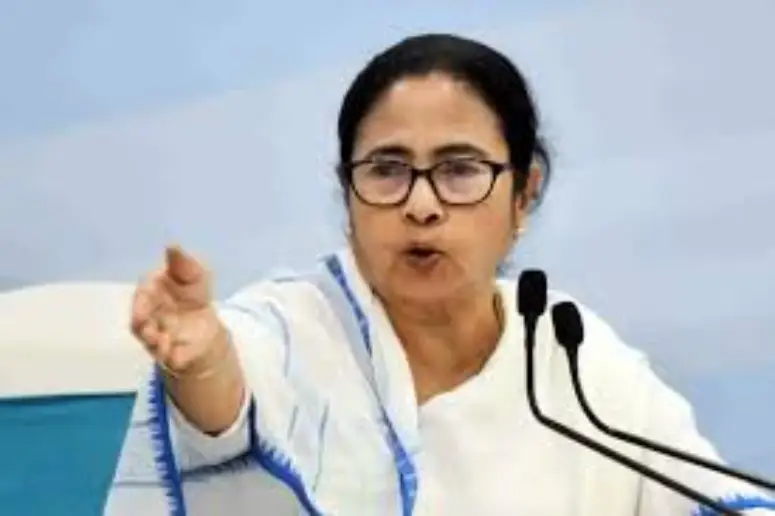
West Bengal Chief Minister Mamata Banerjee has leveled serious allegations against the Border Security Force (BSF), claiming that Indian citizens are being forcibly pushed into Bangladesh. During an administrative meeting with local officials in Cooch Behar on Monday, she criticized the BSF’s activities along the India-Bangladesh border as “excesses.”
The Chief Minister instructed the state police to “be a little more active” and “focus on Naka (check post) operations,” urging them not to be afraid of taking action.
Mamata Banerjee emphasized that Cooch Behar is a border district where law and order must be maintained, and “no excesses will be tolerated.”
Linguistic Identity and Harassment
Addressing allegations of harassment against residents, the Chief Minister strongly rejected the idea of linking language to nationality. She clarified the distinction: “Just because someone speaks Bengali does not make them a Bangladeshi. Bangladesh is a country and West Bengal is a state.”
She further drew parallels with Urdu and Punjabi speakers across the India-Pakistan border, asserting that West Bengal residents should not face harassment based on their language or identity. The Chief Minister’s strong remarks come amid ongoing political tensions regarding citizenship laws in the border regions.
-
 Crime and Justice12 hours ago
Teenager killed after losing control of motorcycle and hitting palm tree in Kushtia’s Daulatpur
-

 Crime and Justice12 hours ago
Bangladeshi national injured and detained by BSF in Chuadanga border shooting
-
 Politics4 hours ago
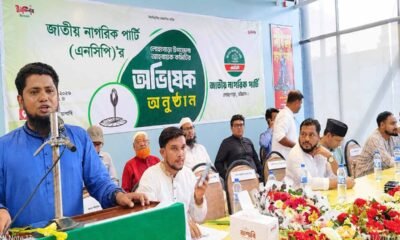
Jatiya Nagorik Party holds inauguration and political showdown in Lohagara
-

 Politics4 hours ago
National Revolution and Solidarity Day: Prime Minister pays tribute at Ziaur Rahman and Khaleda Zia’s graves
-

 Politics4 hours ago
National Revolution and Solidarity Day: Nationwide celebrations and public holiday observed