
International
Twin Earthquakes Hit Indonesia and Myanmar as Bangladesh Recovers from Deadly Tremor

A 5.2-magnitude earthquake struck Indonesia’s North Maluku province, though authorities reported no casualties or damage. The Meteorology, Climatology and Geophysics Agency confirmed that the quake originated 10 kilometres beneath the surface.
The tremor hit the Halmahera region on Sunday and comes as Indonesia continues to experience frequent seismic activity due to its location along the Pacific “Ring of Fire,” where several tectonic plates converge.
Meanwhile, a separate 5.3-magnitude earthquake shook Myanmar’s coastal region the same morning. According to the US Geological Survey (USGS), the quake struck at 10:39am Bangladesh time, with its epicentre located in the Andaman Sea, about 267 kilometres west-southwest of Dawei. The tremor was also felt in parts of neighbouring Thailand, though no damage has been reported.
Just two days earlier, on 21 November, a 5.7-magnitude earthquake jolted several parts of Bangladesh, including Dhaka. The quake, which originated in Narsingdi’s Madhabdi area, left 10 people dead and many others injured.




Astronomers have captured the first direct evidence of a dying star’s final thermal pulse, providing unprecedented insights into stellar evolution. Using the Atacama Large Millimeter/submillimeter Array (ALMA) in Chile, researchers observed the star IRAS 06530-0213, located 12,000 light-years from Earth. This rare observation reveals the intense nuclear activity that occurs as sun-like stars transition into their final red giant phase.
As a star exhausts its core hydrogen, it loses gravitational equilibrium and begins to expand rapidly. During this phase, internal thermal pulses trigger powerful explosions that eject gas and dust into space, eventually forming a planetary nebula. This process marks the dramatic end of a star’s life cycle, scattering essential elements across the cosmos.
The observation confirms that stellar death is not a silent process but a complex, explosive event that shapes the chemical composition of the universe.
Data indicates that the gas shell surrounding the star spans approximately half a light-year and was ejected roughly 6,500 years ago. Furthermore, the star’s hourglass-shaped nebula began forming only 700 years ago, a remarkably short duration in cosmic terms. These findings challenge existing theoretical models regarding how stars distribute materials into space.
Researchers identified heavy isotopes of carbon, oxygen, and nitrogen that do not align with current scientific predictions. Scientists are now analyzing these discrepancies to refine models of how sun-like stars synthesize elements and conclude their life cycles. This discovery serves as a critical step in understanding how dying stars provide the raw materials necessary for the birth of new celestial bodies.
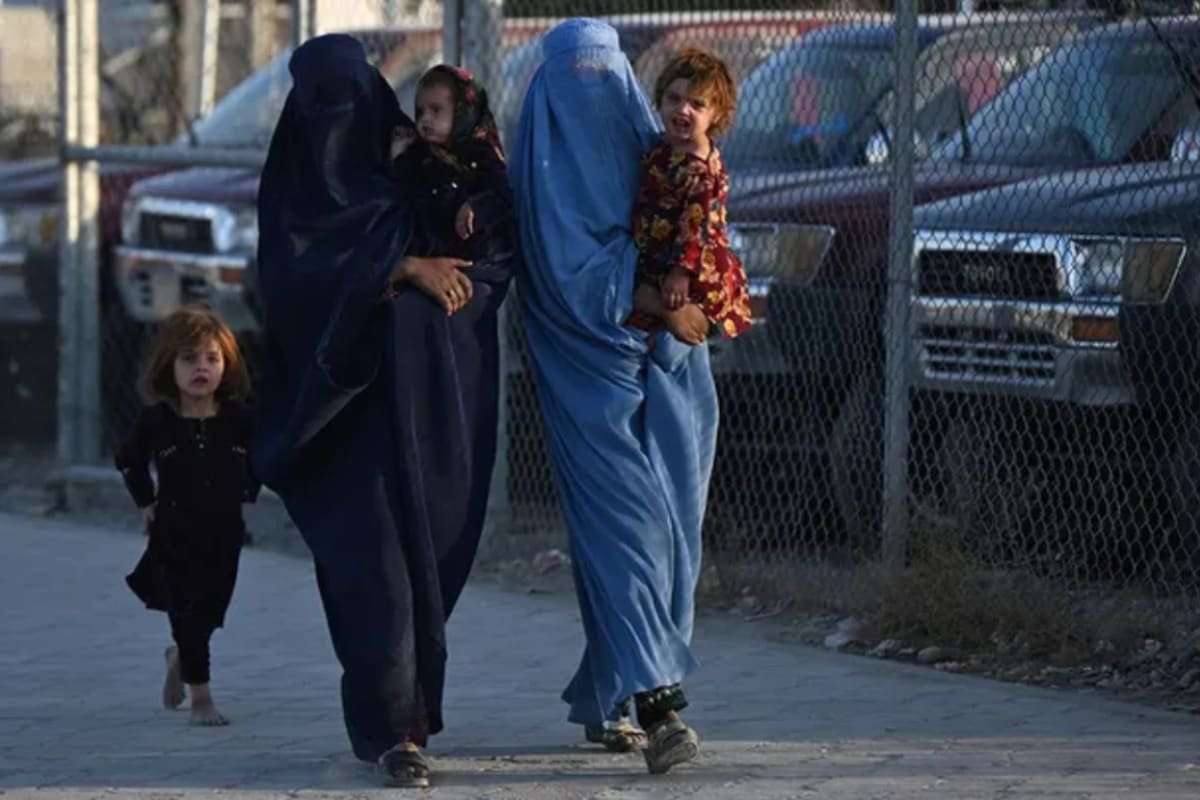
Taliban authorities in Afghanistan’s Balkh province have issued a directive prohibiting the use of women’s names in official documents and medical records. This restrictive policy forces officials to address women using derogatory terms or generic titles, marking a significant escalation in the systematic erasure of female identity under the current regime. International observers and human rights groups have condemned the move as a dehumanizing effort to strip women of their fundamental social and personal recognition.
Reports from international media outlets, including Spain’s El Pais, indicate that women are now being forced to use titles such as ‘Bibi’ or other generic labels instead of their legal names. Activists warn that this practice, which effectively renders women invisible in public and administrative spheres, could soon be expanded across the entire country as part of a broader strategy to suppress female autonomy.
Impact on Healthcare Access
The prohibition has created severe complications within the healthcare system, as the absence of names on medical prescriptions increases the risk of misdiagnosis and treatment errors. By denying women the right to be identified, the Taliban has further restricted their access to essential medical services. This administrative hurdle serves as another layer of exclusion for a population already struggling under extreme societal limitations.
Escalating Restrictions
According to data from the women’s rights organization Femena, the Taliban has imposed more than 144 restrictive edicts since seizing power in August 2021. These measures include sweeping bans on female education, employment, and public speech, effectively reversing the progress made in 2020 when women gained the right to include their names on their children’s birth certificates.
“This is not merely an administrative directive, but a calculated attempt to erase the social and personal identity of Afghan women,” said a local human rights advocate.
While the Taliban’s Ministry for the Propagation of Virtue and the Prevention of Vice claims that women may work within the framework of Sharia law, the reality on the ground remains one of intense repression. Many Afghan women continue to operate secret educational and business initiatives, yet they face constant threats of surveillance, harassment, and arrest by regime authorities.

The Italian Parliament has officially approved a sweeping education reform that bans the wearing of burqas and niqabs in schools while capping the number of foreign-born students at 30 percent per classroom. Prime Minister Giorgia Meloni’s government introduced the legislation, known as ‘Decreto Scuola,’ to enforce discipline and national integration standards within the education system. The new regulations, which include fines of up to 1,000 euros for non-compliance, are scheduled for full implementation by the 2026-27 academic year.
Legislative Framework and Penalties
The government maintains that the ban on face-covering garments promotes gender equality and social cohesion within public institutions. Under the new law, students or their guardians face financial penalties reaching 1,000 euros for violating the dress code. Officials stated that these measures are essential to align the national education system with broader recovery plans and maintain order in classrooms across the country.
Political Opposition and Controversy
Opposition lawmakers vehemently challenged the bill, staging protests in parliament with banners declaring that ‘no one is a foreigner in school.’ Critics argue that the legislation is discriminatory and will foster alienation among Muslim students and immigrant families. They contend that the policy undermines the inclusive nature of the Italian education system and targets specific religious practices under the guise of administrative reform.
Integration and Language Requirements
Despite the strict 30 percent cap on foreign students, the law provides exemptions for those who demonstrate sufficient proficiency in the Italian language. To support integration, the government has mandated Italian language courses for parents of foreign children who struggle to adapt to the local curriculum. These provisions aim to ensure that students from diverse backgrounds can participate effectively in the national academic environment.
Implementation and Future Outlook
The bill passed with 142 votes in favor and 112 against, highlighting a deep political divide regarding immigration and national identity. Political analysts suggest that this move could trigger similar debates across Europe concerning religious attire and the integration of migrant populations. The Meloni administration expects the administrative transition to be completed by 2026, marking a significant shift in Italy’s educational policy.
-

 International2 days ago
Former Defense Contractor Claims Aliens Are Living Among Humans on Earth
-
Crime and Justice2 days ago
Woman killed by nephew over Tk 1,500 dispute in Chhatak
-

 Bangladesh2 days ago
Lohagara begins data collection for family cards amid transparency concerns
-

 Bangladesh2 days ago
PM Tarique Rahman to visit Jashore and Kushtia on December 2
-
 Politics2 days ago
Gopalganj Awami League places 8-point demand including reopening of police stations