
International
Trump Administration Debates New Strategy to Target Remaining Iranian Leadership


The Trump administration is actively debating a controversial strategy to target Iran’s remaining top leadership in an attempt to force a swift conclusion to the ongoing conflict. This proposal has sparked intense internal disagreement within the U.S. government, as officials weigh the potential for a decisive military victory against the risk of catastrophic regional escalation. The deliberations follow months of persistent instability across the Middle East, which has left the geopolitical landscape increasingly volatile.
Shifting Power Dynamics in Tehran
Following the death of Supreme Leader Ayatollah Ali Khamenei in a joint U.S.-Israeli strike on February 28, Iran has faced a significant power vacuum. While Mojtaba Khamenei, the son of the late leader, reportedly assumed the role of Supreme Leader, he has not appeared in public since his father’s death. This leadership uncertainty has intensified the debate in Washington regarding the efficacy of further targeted operations.
Proponents of the plan argue that targeted strikes would exert maximum pressure on Tehran and compel the regime to end the war. They contend that such actions would demonstrate U.S. military superiority and the ability to neutralize high-value targets anywhere. Supporters believe this strategy serves as a clear message to the Iranian establishment that their continued resistance will carry an unsustainable cost.
Internal Opposition and Risks
Conversely, a significant faction of military and administrative officials strongly opposes the proposal. They warn that such strikes would likely backfire, pushing the remaining Iranian leadership toward more radical positions rather than surrender. Critics also highlight the heightened risk of retaliatory attacks against U.S. personnel and interests, which could ignite a broader, uncontrollable conflict across the Middle East.
The administration has yet to reach a final decision on the matter, as the potential for long-term instability remains a primary concern.
Despite the loss of numerous high-ranking military, intelligence, and political figures over the past nine months, the conflict remains unresolved. Officials remain divided on whether further escalation will finally break the stalemate or merely deepen the cycle of violence. The outcome of these internal discussions will likely determine the trajectory of U.S. foreign policy in the region for the foreseeable future.

West Bengal Transport Minister Arjun Singh has sparked a major diplomatic controversy by threatening to occupy Bangladesh by December 16. Speaking to reporters in Kakinada, North 24 Parganas, on Tuesday night, the minister claimed the move was necessary to retaliate against alleged atrocities against Hindus in the neighbouring country. He asserted that the time for excuses has passed and declared that Bangladesh would be taken over by the specified date.
The provocative remarks have raised concerns regarding the stability of bilateral relations between India and Bangladesh. Analysts suggest that such rhetoric from a government official is highly unusual and contradicts standard diplomatic protocols. The timing of the threat is particularly sensitive, as it coincides with Bangladesh’s Victory Day and recent political discourse surrounding the potential return of ousted former Prime Minister Sheikh Hasina.
Political and historical context
The selection of December 16 as a deadline carries significant weight, as it marks the anniversary of Bangladesh’s independence. While the minister’s specific intent behind the ultimatum remains unclear, the statement has drawn sharp criticism across social media and political circles. Observers argue that the comments reflect a surge in aggressive nationalist rhetoric that could undermine regional security and the sovereignty of a neighbouring nation.
West Bengal Transport Minister Arjun Singh said, “Enough is enough, no more excuses will be tolerated, and Bangladesh will be taken over by December 16.”
Neither the Indian central government nor the West Bengal state administration has issued an official response to the minister’s statement. The international community is now watching to see how this inflammatory rhetoric might impact the ongoing efforts by both nations to maintain peace and security along their shared border. Experts maintain that such comments are inconsistent with India’s established foreign policy.
International
Israeli President Herzog Condemns Settler Violence Against Palestinians as ‘Affront to God’
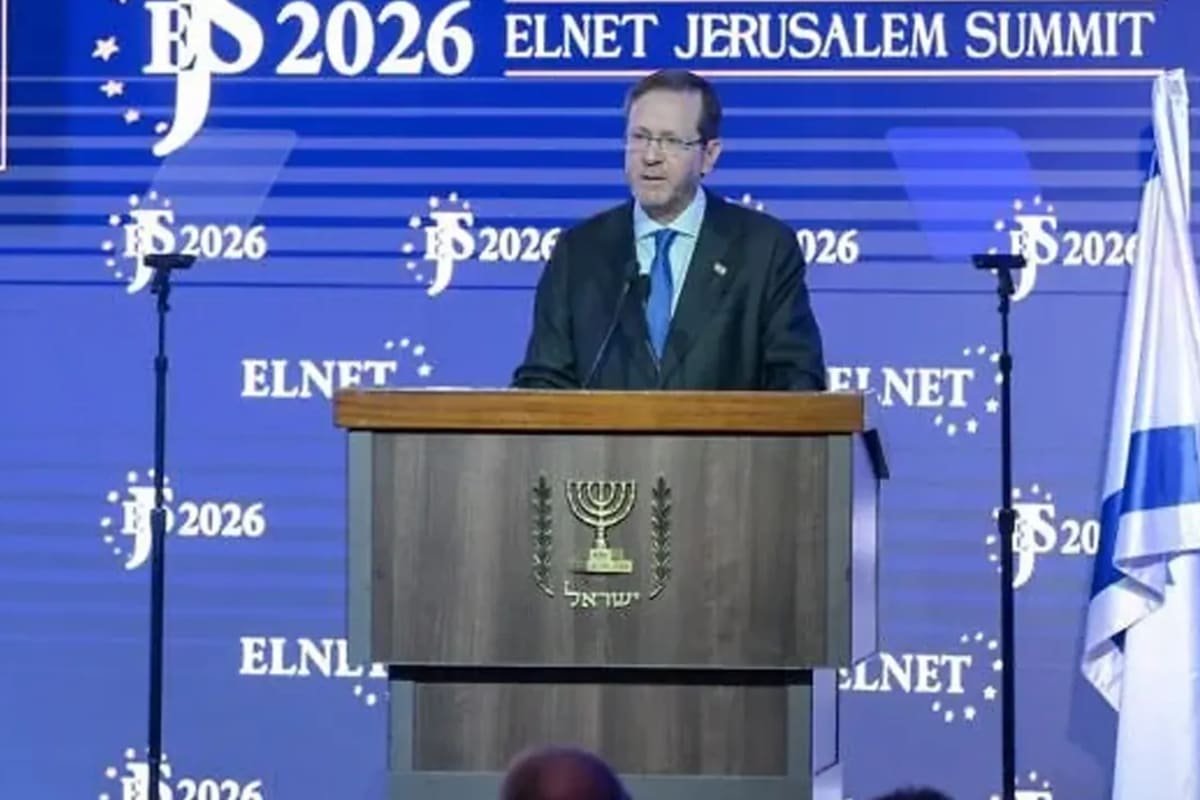
Israeli President Isaac Herzog has strongly condemned the recent surge in violence by Jewish settlers against Palestinians in the occupied West Bank, labeling the attacks a moral and religious transgression. Addressing the ELNET conference in Jerusalem, Herzog described the arson and property destruction as an ‘affront to God’ that contradicts core Jewish values. This condemnation arrives amid mounting international pressure on the Israeli government to curb extremist activities in the region.
The violence escalated last Saturday night when extremist settlers set fire to over a dozen vehicles and several homes in Palestinian villages near Ramallah. President Herzog emphasized that such acts of lawlessness are fundamentally incompatible with Israel’s moral standing and historical traditions. He reiterated that the state remains committed to upholding the rule of law despite the ongoing tensions.
Internal Political Criticism
The surge in settler violence has ignited a fierce debate within Israeli domestic politics. Former Prime Minister Naftali Bennett criticized the current administration, accusing authorities of turning a blind eye to what he termed ‘Jewish terrorism.’ Critics argue that the government’s perceived inaction is exacerbating the security crisis and further complicating the already volatile situation in the West Bank.
President Isaac Herzog said, “These acts of violence are an affront to God and a stain on our moral character that we must address with the full force of the law.”
International concern regarding the safety of Palestinians has reached a critical point, with several nations demanding accountability for the perpetrators. While the United Kingdom and various European countries have called for immediate legal action, Australia has moved to impose sanctions on specific settlers involved in the violence. These diplomatic moves reflect a growing global consensus that the current level of instability is unsustainable.
President Herzog assured diplomats at the conference that Israeli security forces are actively working to address this moral failure. He confirmed that authorities are currently identifying and arresting those responsible for the attacks to ensure they face swift justice. The government now faces the challenge of demonstrating its effectiveness in curbing extremism while navigating intense scrutiny from the international community.

Despite the conclusion of the 31st UN Climate Change Conference (COP31) in Antalya, Turkey, without a final agreement, Bangladesh successfully secured 1.05 billion taka in climate grant commitments. The summit ended without a consensus on fossil fuel reduction or adaptation financing, marking the first time since the 2009 Copenhagen summit that a COP event concluded without a formal document. This outcome highlights significant challenges in global climate diplomacy for vulnerable nations.
The conference failed to establish a concrete roadmap for loss and damage funding, leaving many developing nations disappointed. Global leaders struggled to reach an agreement on the 120 billion dollar global adaptation target, exposing deep divisions in international climate policy. This lack of a final accord underscores the growing fragility of global efforts to combat climate change effectively.
Strategic Funding Success
Bangladesh secured approximately 682 million taka from the Global Shield and 373 million taka from the Climate Investment Fund. These funds represent a vital diplomatic achievement for the country amidst the broader failure of the summit to deliver comprehensive global solutions. The government now aims to expedite the disbursement process to ensure these resources are utilized effectively for climate resilience projects.
Prime Minister’s Special Assistant for Environment, Forest and Climate Change Dr. Saimum Parvez said, “Despite the global disappointment, securing this funding is a significant diplomatic success for Bangladesh.”
Moving forward, the government plans to explore new funding avenues through partnerships with international organizations like the Global Mangrove Alliance. Bangladesh also intends to pursue carbon trading agreements with Singapore and support the Global Rooftop Solar Declaration. The administration remains committed to advocating for grant-based assistance rather than loan-based financing to address the ongoing climate crisis.
-

 Politics2 days ago
Nahid Islam Calls for National Unity to Counter Indian Hegemony
-

 Crime and Justice2 days ago
BGB heightens security at Benapole border following reports of Awami League leaders’ meeting
-
Crime and Justice2 hours ago
Pregnant Worker Debunks Death Rumors at Gazipur Police Station
-

 Economy2 days ago
Garment Workers Reject Employers’ New Wage Proposal Amid Ongoing Deadlock
-

 Crime and Justice1 day ago
Police Arrest BCL Activist for Muksudpur Police Station Attack and Social Media Celebration