
International
14 Killed in Nepal Protests Over Social Media Ban and Corruption

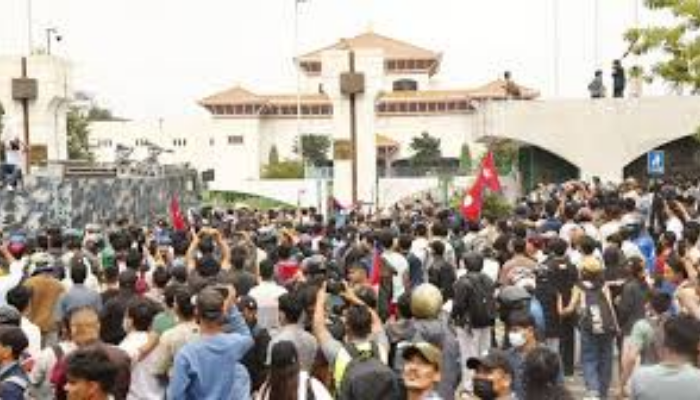
At least 14 people, including a 12-year-old child, were killed in violent protests in Nepal’s capital Kathmandu against corruption and the government’s ban on social media platforms. More than a hundred others were injured.
Protesters defied curfew on Monday and stormed the restricted parliamentary zone, prompting police to fire tear gas, rubber bullets, and water cannons. The army was later deployed to restore order.
Kathmandu’s District Chief Chhabilal Rijal announced a curfew from 12:30 pm to 10 pm, banning movement and gatherings around high-security areas including the residences of the President and Prime Minister. A journalist, Shyam Shrestha, was injured by rubber bullets while covering the protest.
The unrest erupted after the government blocked 26 social media platforms, including Facebook, YouTube, X, Instagram, and Snapchat. Protesters said the move was aimed at suppressing free speech and voiced anger over entrenched corruption and political elites’ lavish lifestyles.
The government defended its decision, citing a cabinet ruling requiring foreign tech firms to register locally and appoint representatives. However, local media reported that the restrictions might soon be lifted to ease the crisis.









A former United States defense contractor has sparked global intrigue by claiming that highly intelligent extraterrestrial beings are not confined to space but have been living among humans on Earth for an extended period. The whistleblower asserts that these entities have successfully integrated into human society while maintaining their true identities under the guise of human appearances.
Drawing from his extensive experience in classified government and defense projects, the contractor claims to possess knowledge of evidence that remains hidden from the general public. He alleges that influential governments and intelligence agencies worldwide are fully aware of this presence but maintain strict secrecy to prevent widespread public panic and protect strategic interests.
Scientific skepticism remains high
Mainstream scientists and space researchers have dismissed these claims, citing a complete lack of verifiable scientific evidence to support the existence of extraterrestrial life on Earth. Experts argue that without tangible data or peer-reviewed documentation, such assertions remain speculative and lack a credible foundation. Despite this skepticism, the source’s background in defense has fueled intense public debate and curiosity.
The former contractor stated, “Highly intelligent extraterrestrial beings are not just visiting our planet; they have been living among us in human disguise for a long time.”
It remains unclear whether the contractor intends to release any classified documents or physical proof to substantiate his claims. While the scientific community continues to demand empirical evidence, the controversy has reignited international discourse regarding the potential for extraterrestrial contact and the transparency of government defense programs.

Six senior leaders from India’s ruling Bharatiya Janata Party (BJP) have issued a series of provocative threats against Bangladesh over the past month, including calls for military occupation, economic blockades, and war. These inflammatory remarks, delivered between November 8 and 24, have sparked significant diplomatic tension and raised concerns regarding the stability of bilateral relations between the two neighboring nations.
The group of leaders, including West Bengal state officials and a Jharkhand parliamentarian, utilized rhetoric targeting Bangladesh’s sovereignty under the guise of addressing internal political instability and minority security. Arjun Singh notably threatened to occupy Bangladesh by December 16, while Amlan Bhaduri called for an international ban and military action against the country.
Nishikant Dubey, a Member of Parliament from Jharkhand, further escalated tensions by claiming parts of Bangladesh—specifically Chattogram, Noakhali, and Sylhet—as Indian territory, effectively challenging established geopolitical boundaries.
State President Shamik Bhattacharya advocated for the weaponization of economic influence, repeatedly threatening to seal the border and induce a food crisis within Bangladesh. These statements have drawn sharp criticism from observers who argue that such aggressive posturing by individuals in responsible positions violates international law and diplomatic decorum.
While the Indian central government has yet to issue an official statement regarding these remarks, the rhetoric has fueled public resentment and a crisis of confidence in Bangladesh. Analysts warn that this trend of hostile discourse complicates the diplomatic landscape for the interim government and threatens the long-standing stability of South Asian regional politics.
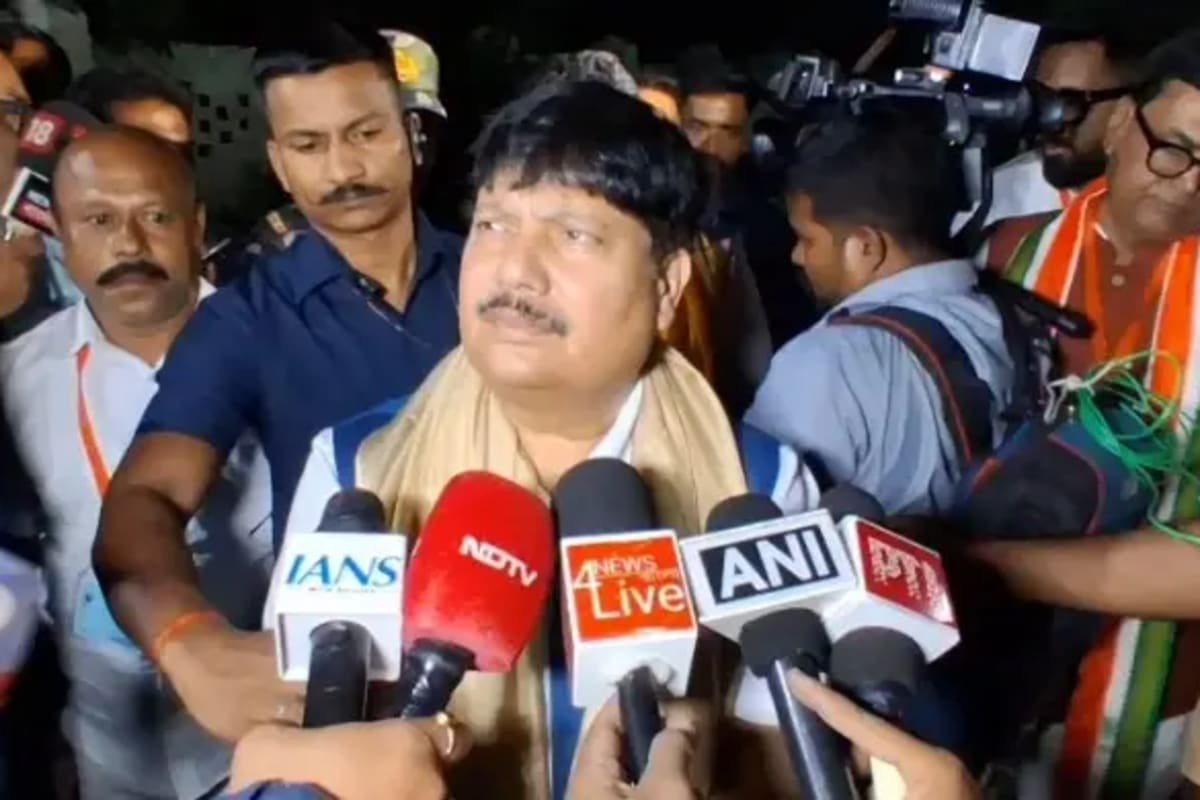
West Bengal Transport Minister Arjun Singh has sparked a major diplomatic controversy by threatening to occupy Bangladesh by December 16. Speaking to reporters in Kakinada, North 24 Parganas, on Tuesday night, the minister claimed the move was necessary to retaliate against alleged atrocities against Hindus in the neighbouring country. He asserted that the time for excuses has passed and declared that Bangladesh would be taken over by the specified date.
The provocative remarks have raised concerns regarding the stability of bilateral relations between India and Bangladesh. Analysts suggest that such rhetoric from a government official is highly unusual and contradicts standard diplomatic protocols. The timing of the threat is particularly sensitive, as it coincides with Bangladesh’s Victory Day and recent political discourse surrounding the potential return of ousted former Prime Minister Sheikh Hasina.
Political and historical context
The selection of December 16 as a deadline carries significant weight, as it marks the anniversary of Bangladesh’s independence. While the minister’s specific intent behind the ultimatum remains unclear, the statement has drawn sharp criticism across social media and political circles. Observers argue that the comments reflect a surge in aggressive nationalist rhetoric that could undermine regional security and the sovereignty of a neighbouring nation.
West Bengal Transport Minister Arjun Singh said, “Enough is enough, no more excuses will be tolerated, and Bangladesh will be taken over by December 16.”
Neither the Indian central government nor the West Bengal state administration has issued an official response to the minister’s statement. The international community is now watching to see how this inflammatory rhetoric might impact the ongoing efforts by both nations to maintain peace and security along their shared border. Experts maintain that such comments are inconsistent with India’s established foreign policy.
-

 Bangladesh2 days ago
Railways suspend Benapole and Khulna-Dhaka train services over security concerns
-

 International1 day ago
Former Defense Contractor Claims Aliens Are Living Among Humans on Earth
-

 Bangladesh1 day ago
Lohagara begins data collection for family cards amid transparency concerns
-
 Bangladesh2 days ago
20 Youths in Rangamati Gain Self-Reliance Through Livestock Training
-
 Politics2 days ago
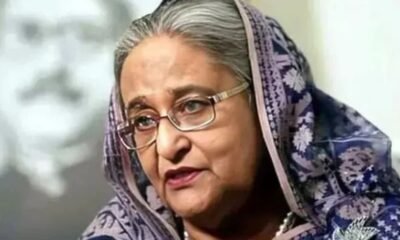
Sheikh Hasina Announces Return to Bangladesh on December 16